

Taiwan Herping
If you love reptiles or just enjoy exploring at night, Taiwan is one of the best places in Asia for herping, the search for snakes, lizards, and other reptiles in their natural habitat. The island’s mix of mountains, forests, and humid subtropical climate makes it a hotspot for snake diversity, including some species found nowhere else in the world.
Whether you’re driving along misty mountain roads or hiking through lush lowland forests, you’re never too far from wildlife. Taiwan’s snakes are generally not aggressive, and as long as you respect them from a distance, herping here can be both safe and rewarding.
During my two months in Taiwan, my partner and I dedicated a few nights to herping, the search for reptiles and amphibians in their natural habitats. Taiwan is an incredible place for this, with its humid forests, winding mountain roads, and rich snake diversity. In just four nights spread across those two months, we managed to spot a surprising number of species, including some rare finds.
For more information on Taiwanese snake species, check out Snakes of Taiwan!
A Few Facts About Taiwan’s Herps
-
Taiwan is home to over 60 species of snakes, of which around 20 are venomous.
-
You can also find around 40 species of lizards, including skinks, geckos, and agamids.
-
The island’s snake diversity ranges from tropical lowland species like the Greater Green Snake and Many-banded Krait, to cooler high-altitude species such as the Mountain Keelback.
-
Some species, like the Taiwan Habu and Taiwan Bamboo Viper, are endemic, meaning they’re only found in Taiwan.
-
Snakes are most active from April to October, with warm, humid nights offering the best conditions for herping.
Taiwan’s snakes play an important role in the ecosystem, they help control rodent populations and serve as prey for birds and mammals. Unfortunately, like many reptiles worldwide, they face threats from habitat loss, road traffic, and persecution due to misunderstanding or fear.
Where to Go Herping in Taiwan
If you’re planning to go herping in Taiwan, here are a few of the best regions to explore:
-
Mingchi National Forest / Road 7 (Taoyuan–Yilan): Mountainous, lush, and perfect for roadside herping at dusk.
-
Kaohsiung’s surrounding forests: Especially near Maolin and Dashu, known for their snake diversity.
-
Kenting National Park: Taiwan’s tropical south, great for warm-night herping and high encounter rates.
-
Hualien and Taroko area: Dense forests and river valleys, often with interesting finds after rain.
Herping along mountain roads after sunset is common here, just drive slowly, stop safely, and use a flashlight or headlamp to scan the vegetation and road edges.
How to Stay Safe and Respectful
Taiwan’s snakes are fascinating but deserve respect. Here’s how to stay safe and protect the wildlife while you’re out there:
-
Don’t touch venomous species. Even experienced herpers use tools instead of hands.
-
Use red light or low light when taking photos to avoid stressing the animals.
-
Watch where you step. Many snakes freeze instead of fleeing when disturbed.
-
Don’t block their path or move them off-road for photos, let them continue naturally.
-
Stay quiet and calm. Movement and noise can scare wildlife and ruin your chances of seeing more.
-
Respect local rules. Some forest roads close at night, always check the schedule before going.
-
Be visible on roads. Wear reflective clothing and park safely when herping by car.
By following these simple steps, you’ll not only stay safe but also make sure the snakes stay unharmed, which is the whole point of responsible herping.
Our Herping Experiences in Taiwan
1. Mingchi National Forest (Road 7)
If you’re into herping, Road 7 between Taoyuan County and Yilan is a must-visit, as it's primarily known for 100 pacers . It’s about a 10 km stretch of prime herping territory, with plenty of safe pull-over spots and excellent roadside habitat. Just remember: go west to east, as there’s a gate on the eastern side that closes at 6 PM near kilometre 50. If you miss it, you’ll need to loop all the way around, not ideal after dark.
From around 6 PM onward, the snakes start appearing. The cool mountain air and high humidity make this area especially productive.
Night 1:
Our first night was more of a learning experience, we spent too much time in the car, which didn’t work too well. Luckily, other herpers nearby messaged us when they spotted something, so we didn’t go home empty-handed.
-
Cat Snake (Boiga kraepelini): mildly venomous, beautiful but best admired from a distance.
-
Bamboo Viper (Trimeresurus stejnegeri): venomous and quite common across Taiwan.
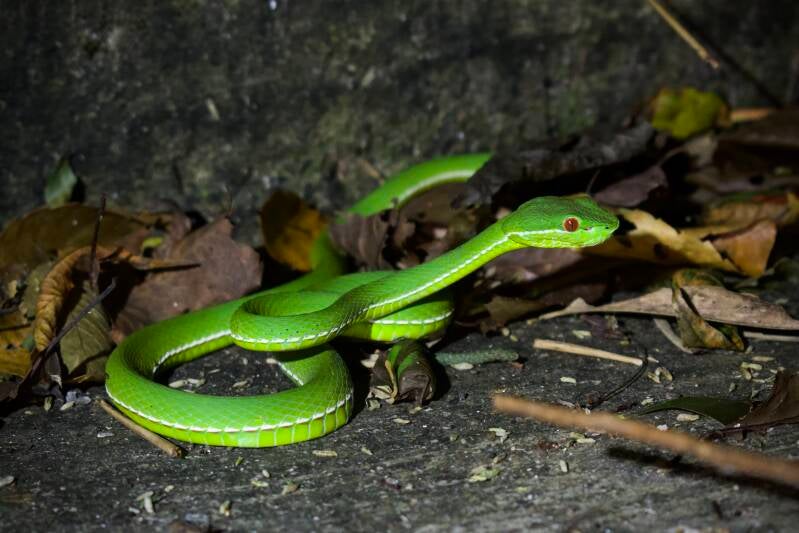
Bamboo Viper (Trimeresurus stejnegeri)
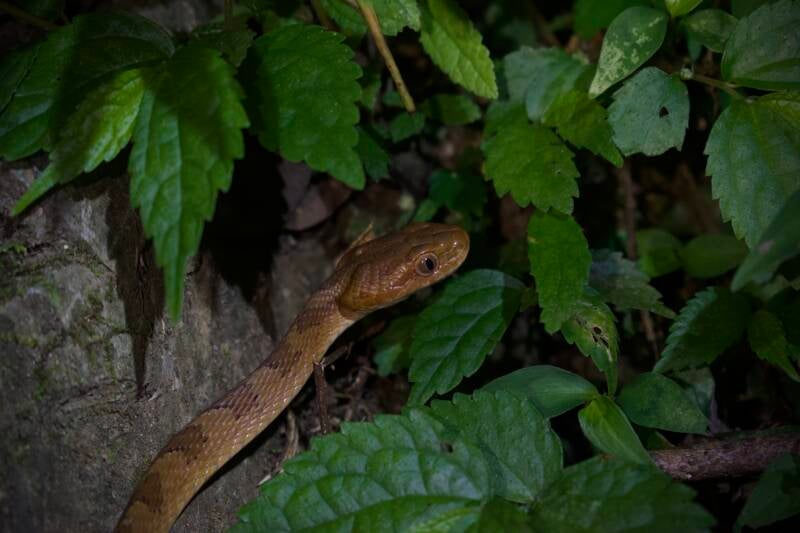
Cat Snake (Boiga kraepelini)
Night 2:
Determined to improve, we focused on walking sections of the road instead of driving. It worked, most snakes here blend perfectly into the mossy cliffs and rock faces.
That night’s finds included:
-
6 Bamboo Vipers
-
1 Red Banded Snake (Lycodon rufozonatus): non-venomous but defensive; it bit me (as expected).
-
1 Red Bamboo Rat Snake (Oreocryptophis porphyracea): rare, non-venomous, and incredibly calm. Definitely the highlight of the night.
Even the other herpers we met that evening hadn’t found one yet, so we left feeling pretty lucky, even without the elusive Hundred Pacer.
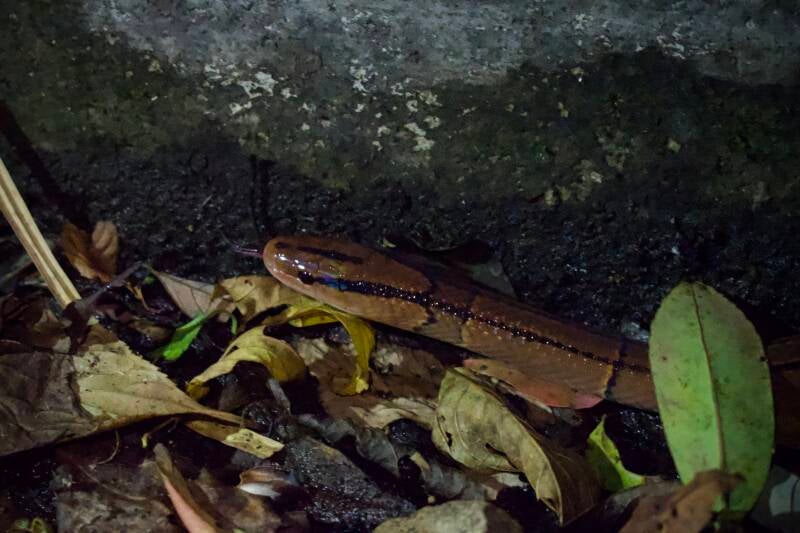
Red Bamboo Rat Snake (Oreocryptophis porphyracea)
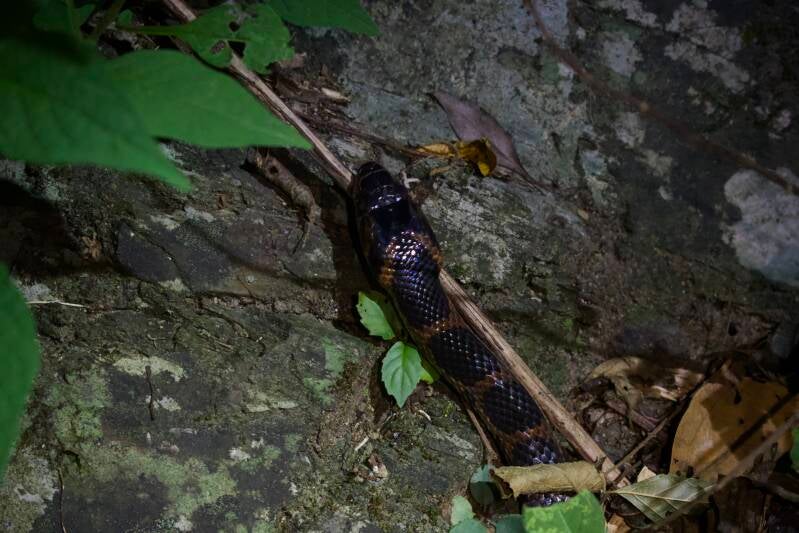
Red Banded Snake (Lycodon rufozonatus)
2. Herping near Kaohsiung
We also did a small night hike just outside Kaohsiung, as the forests surrounding the city are known for their high snake diversity. To our surprise, we witnessed something incredible, a Taiwanese Beauty Rat Snake (Orthriophis taeniurus friesei) mid-meal, devouring a squirrel. Watching that natural encounter up close was definitely one of the wildest highlights of our trip.


3. Kenting Region (Southern Taiwan)
Before leaving Taiwan, we did one last herping trip, this time in the Kenting region, right at the southern tip of the island. Our target? Again, the legendary Hundred Pacer. Unfortunately, being late in the season (November), we didn’t spot one, but it still turned out to be our most productive night yet.
In a single evening, we saw 34 snakes from six different species, an unbelievable record for us.
-
8 Greater Green Snakes (Ptyas major)

- 6 Habu's (Protobothrops mucrosquamatus)
-
15 Bamboo Vipers
-
3 Many-banded Kraits (Bungarus multicinctus)
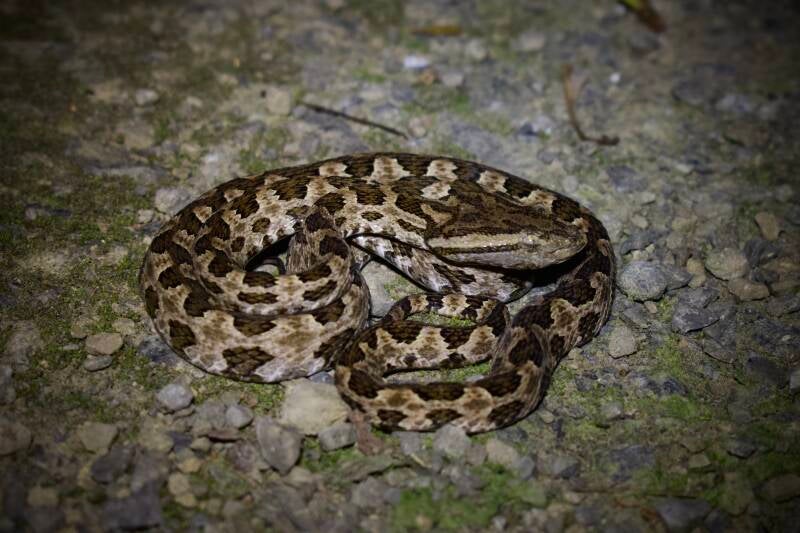
Habu (Protobothrops mucrosquamatus)
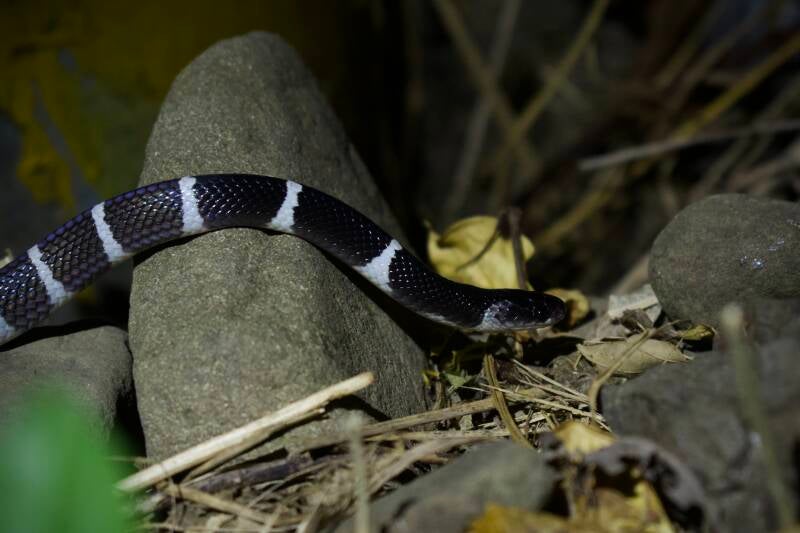
Many-banded Kraits (Bungarus multicinctus)
- 1 Red Banded Snake
-
1 Mock Viper (Psammodynastes pulverulentus)
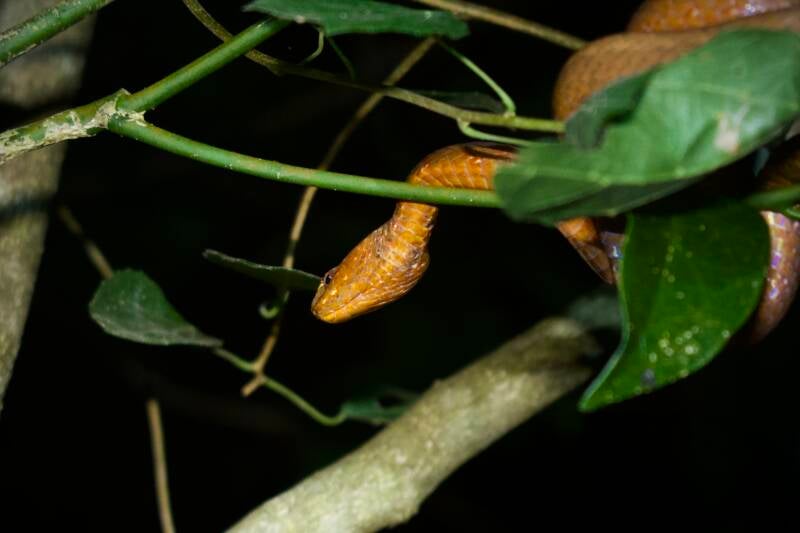

Mock Viper (Psammodynastes pulverulentus)
Final Thoughts
Herping in Taiwan is an incredible experience, whether you’re a seasoned reptile enthusiast or just curious about the island’s wildlife. The diversity of snakes, the accessibility of herping spots, and the sheer beauty of Taiwan’s landscapes make it an ideal destination for nature lovers.
If you decide to try it yourself, be respectful of wildlife: don’t handle venomous species, move slowly, and always let the animals go about their business. Even without touching a single snake, watching them in their natural environment at night is an unforgettable experience.
Create Your Own Website With JouwWeb