

Wildlife You Can Spot in Just 3-4 Days in North Pantanal
Short on time but still want to see wildlife in Brazil’s North Pantanal, without dropping hundreds on a luxury ecolodge?
This guide is for you. Written by a biologist and traveler (hi, it’s me), it’s based entirely on our real sightings and experience. With an international driver’s license, a rented car, and a little planning, you can have your own mini wildlife expedition for a fraction of the usual cost.
Here’s everything you need to know about what to realistically expect and what species you could spot in just 3–4 days in the region.
Want to read more on how we planned our trip? Take a look here!
Where Is North Pantanal & Why Visit?
North Pantanal is one of the best places in the world to see jaguars in the wild. This part of Brazil is incredibly rich in biodiversity, and unlike the South Pantanal (which is more about landscapes and birds), North Pantanal is where your chances of spotting big stuff, like jaguars, giant otters, and anacondas, really go up.
That said, it has also become notoriously expensive. Most people book multi-day all-inclusive ecolodge tours for $500–$1000+. But you don’t have to. We did it with a rental car, some DIY food (frozen lasagnas, yes still frozen when we ate it), and a budget-friendly lodge stay (in our car, no less), and still had incredible wildlife sightings.
What’s the Best Time to Visit?
For the highest chance of seeing jaguars, visit June to October, this is the dry season, when the water levels drop and animals (including jaguars) tend to gather near rivers.
We went in mid-June, which was perfect. Water levels were low enough, and it wasn’t yet peak tourist season, so we had several sightings all to ourselves.
Target Species & What We Actually Saw
Our target list included some of the main attractions of the Pantanal:
- Jaguars (yes)
- Yellow Anaconda (no)
- Giant Anteaters (yes)
So what can you realistically expect to see? Here’s a list based on our own sightings (with zero tour guides involved except for the jaguar boat):
Mammals
- Jaguars (Panthera onca): We saw 5, including one hunting a caiman. This was during our 7-hour shared boat tour (about $100 USD pp).
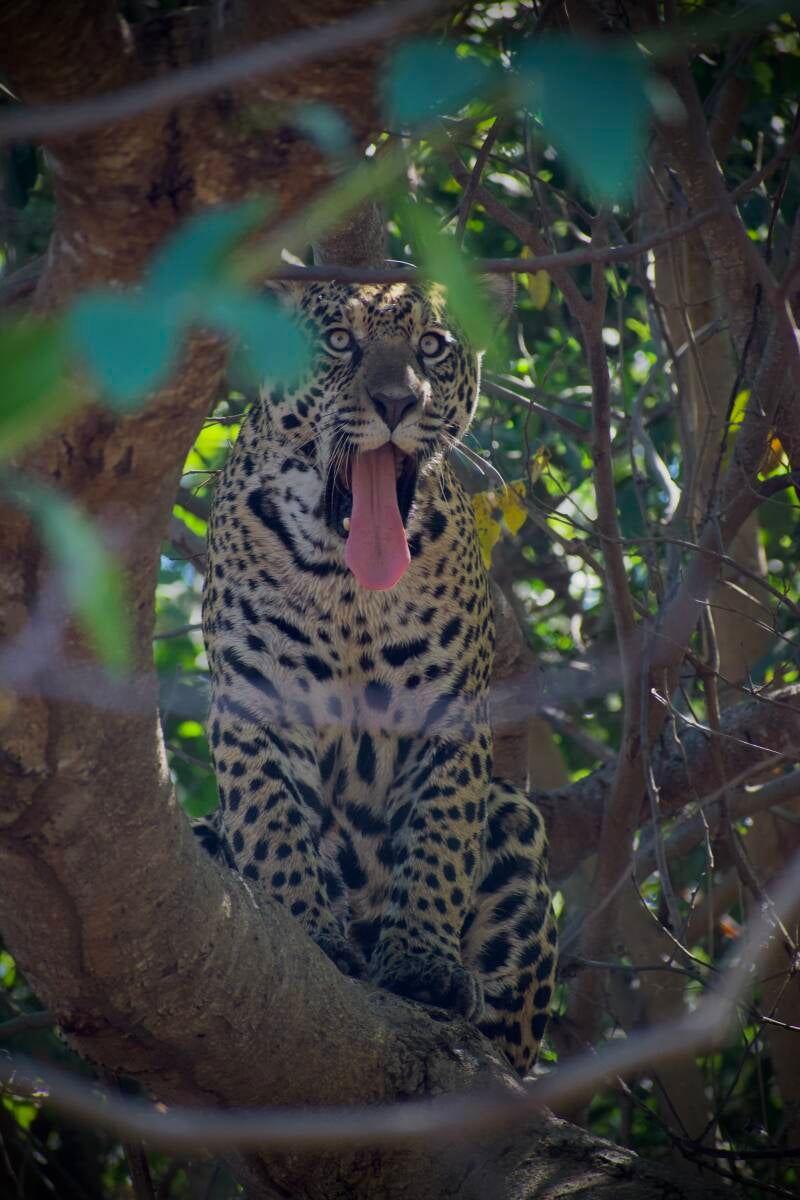

- Ocelots (Leopardus pardalis): Waited for these for a long time! We finally saw 3 along the Transpantaneira after sunset.
- Lowland tapir (Tapirus terrestris): Another animal we were waiting to see for an insanely long time. Finally spotted one crossing the road at night.


- Giant anteaters (Myrmecophaga tridactyla): I still cannot believe we had to wait this long for an anteater sighting. But, we got extremely lucky on our last evening cruise along the Transpantaneira.

- Capybaras (Hydrochoerus hydrochaeris): Everywhere: along the Transpantaneira, near the riverbanks, at lodges.
-
Crab-eating foxes (Cerdocyon thous): Especially active around dusk. We saw them near the roadside.
-
Pampas deer (Ozotoceros bezoarticus): Several individuals grazing in open fields along the road.

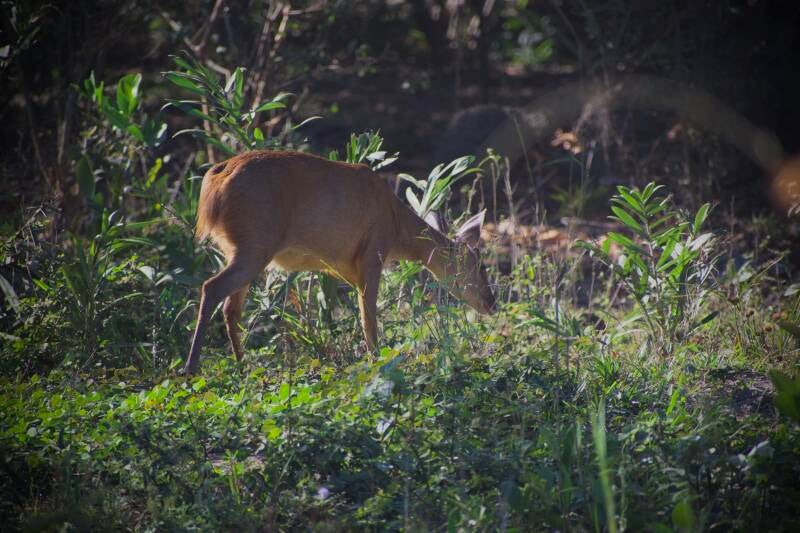
- Guinea pigs (Cavia aperea): Quick little guys, usually spotted at dawn or dusk near the vegetation.
-
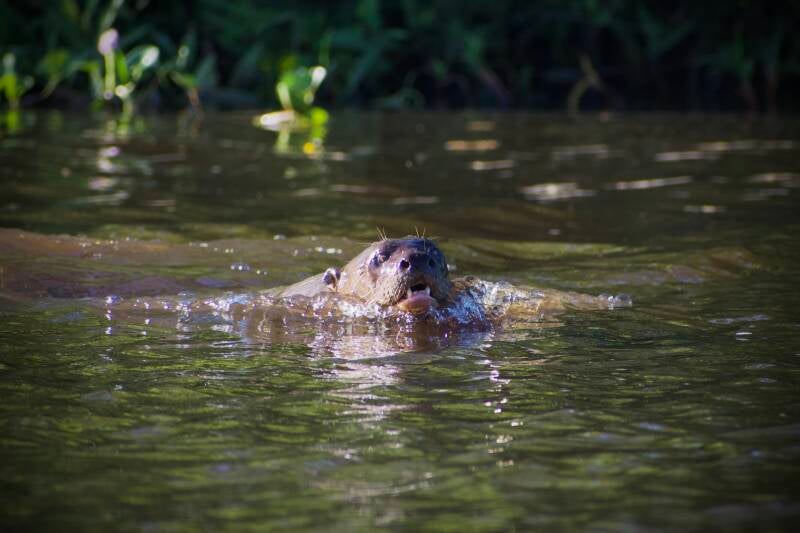
Giant otters (Pteronura brasiliensis): Seen during the boat tour, cruising and playing in the water.
Reptiles & Amphibians
- Caiman (Black, Melanosuchus niger, and white, Caiman crocodilus): Genuinely everywhere. You’ll lose count.
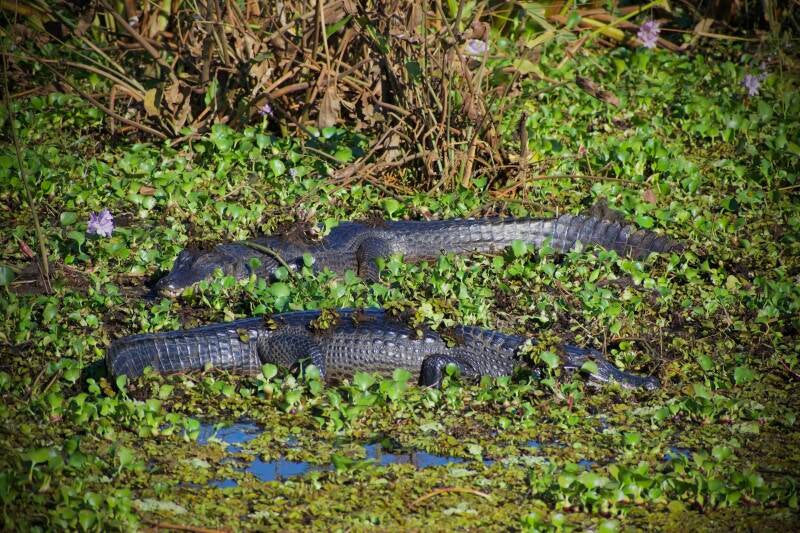
- Green iguanas (Iguana iguana): Lounging in trees above the rivers during the jaguar tour.

-
Caiman Lizard (Dracanea): We spotted one briefly along the Transpantaneira. It was way too fast to film, but a cool surprise nonetheless.
-
Mato Grosso lancehead (Bothrops mattogrossensis): We saw three during our night drives.
-
Black false boa (Pseudoboa nigra): Also spotted at night, crossing the road.
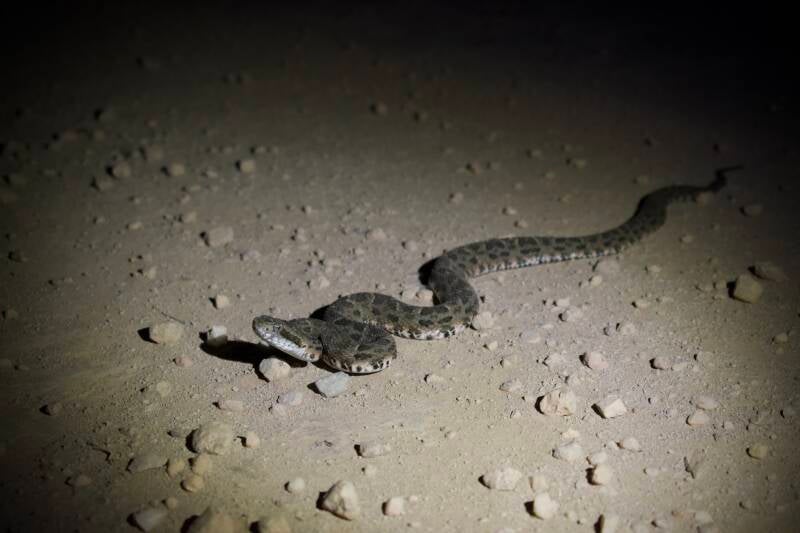
Mato Grosso lancehead (Bothrops mattogrossensis)
Birds
We saw a lot of overlap with South Pantanal bird species, but here are some key highlights:
-
Jabirus (Jabiru mycteria): The iconic stork of the Pantanal.
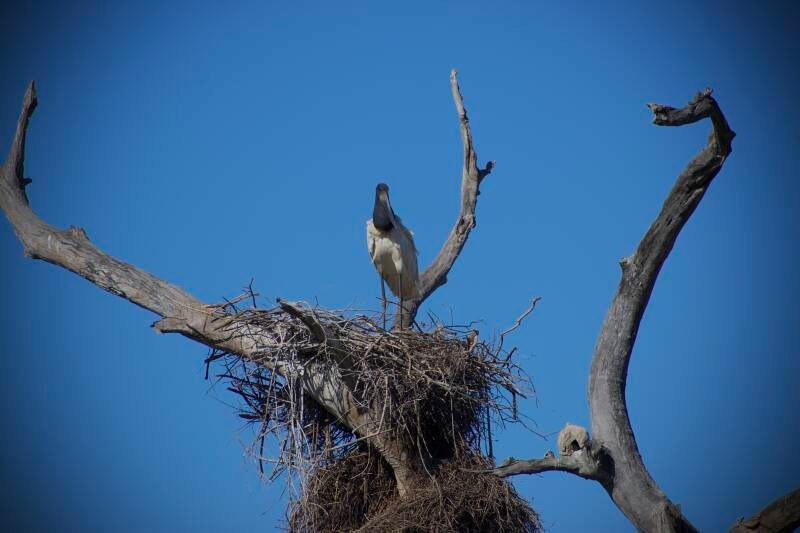
- Hyacinth and scarlet macaws: Bright, beautiful, and noisy.
-
Toucans: Including a new one for us: Chestnut-eared aracari (Pteroglossus castanotis).

- Great horned owls (Bubo virginianus): Seen at night, perched near the road.
- Emas (Rhea americana): We didn't see as many as we saw in South Pantanal, but still always fun to spot!
-
Multiple ibis species, curassows, spoonbills, kingfishers, parakeets, hawks, and more.

Create Your Own Website With JouwWeb