

Hluhluwe-iMfolozi Park
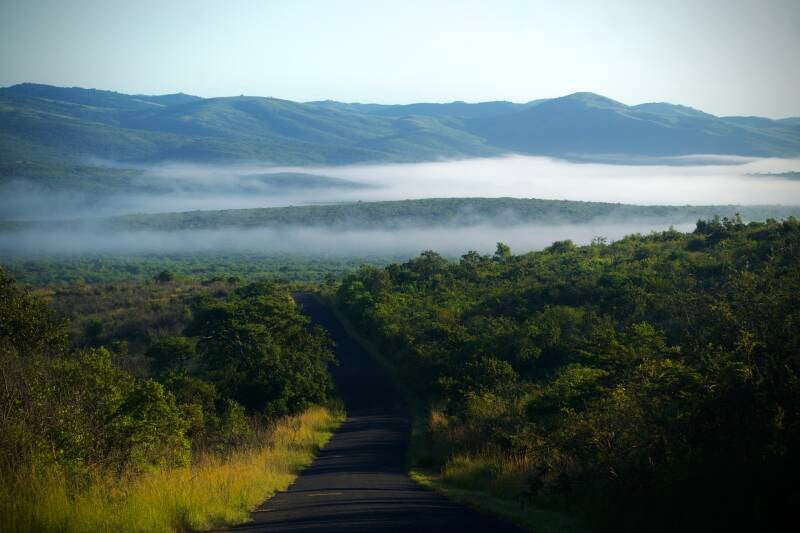
Hluhluwe-Imfolozi Park is one of those places that quietly ends up being way better than expected. It’s a Big 5 reserve in KwaZulu-Natal and, fun fact, the oldest proclaimed nature reserve in Africa, best known for its role in saving the white rhino from extinction. You can try to see lions, leopards, buffalos, giraffes, rhinos, elephants, wild dogs, zebras, cheetahs, and more.
If I’m not mistaken, it’s also one of the biggest parks in South Africa after Kruger National Park. We didn’t manage to make it to Kruger this time, but honestly… Hluhluwe delivered everything we were hoping for anyway. Same wildlife potential, cheaper, fewer crowds, and a much more relaxed experience overall.
And safe to say: we were not disappointed.
How to Get There
Getting to the park is actually pretty straightforward. From Johannesburg, you can take a relatively cheap flight to either Durban or Richards Bay, usually for around $50-60 if you book in advance.
From there, the easiest option is to rent a car and drive to St Lucia, which is about an hour away from the park and makes a perfect base. Technically, you can take minibus taxis from Durban, Richards Bay, or even Johannesburg, but I honestly wouldn’t recommend it. They’re chaotic, not exactly luggage-friendly, and let’s just say… road safety isn’t always the top priority.
We rented a car through Woodford Car Hire for two weeks, which cost us around 8000 rand total (about €200 per person) including insurance and an extra driver. It ended up being one of the best decisions of the trip, since having your own car gives you complete freedom to explore the area.
Where to Stay
Instead of staying inside the park (which gets expensive quickly), we based ourselves in St Lucia.
We stayed at Flamboyant Holiday Flats for about 800 rand per night for two people, which was perfect for budget travel. Having a kitchen made a big difference too, since eating out constantly in South Africa can add up fast.
Safari Experience
We decided to spend two full days in the park, starting with a guided safari to get a feel for the area (GetYourGuide) for 95 euros per person, followed by a cheaper self-drive a couple of days later. The park opens early and closes late afternoon, so expect an early start. Opening hours of the park:
- Summer (November-May): 5:00 AM - 6:00 PM (7 PM in peak season)
- Winter (June-October): 6:00 AM - 5:00 PM
Day 1: Guided Safari
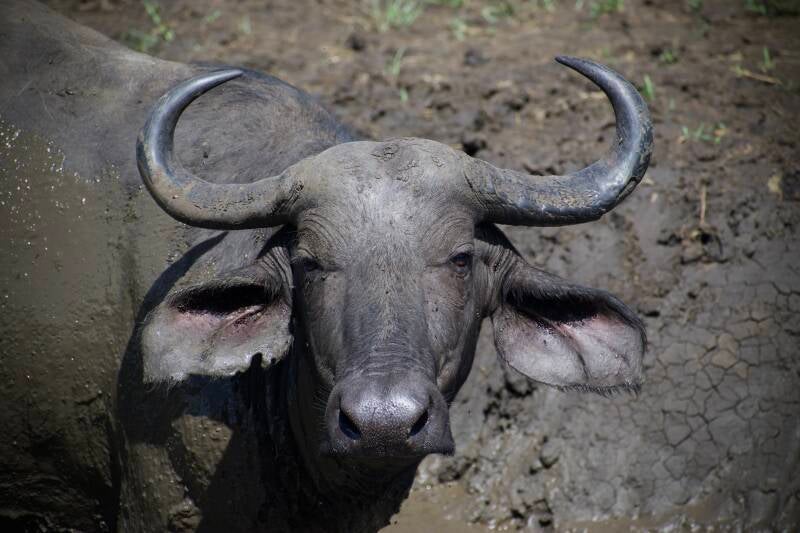
Our first day started at the slightly painful hour of 5 AM, with pickup from St Lucia and arrival at the park just after opening. Most safari vehicles tend to head toward the Memorial Gate area, since it’s known for rhino sightings, but we didn’t even get that far before already spotting wildlife. Within minutes of entering the park, we were greeted by three buffalo bulls, just casually standing by the road like they owned the place.
One of the biggest advantages of going with a guide is that they’re all connected through a sightings WhatsApp group. So when one guide spots something, the message spreads quickly.
In our case, that message was: lions.
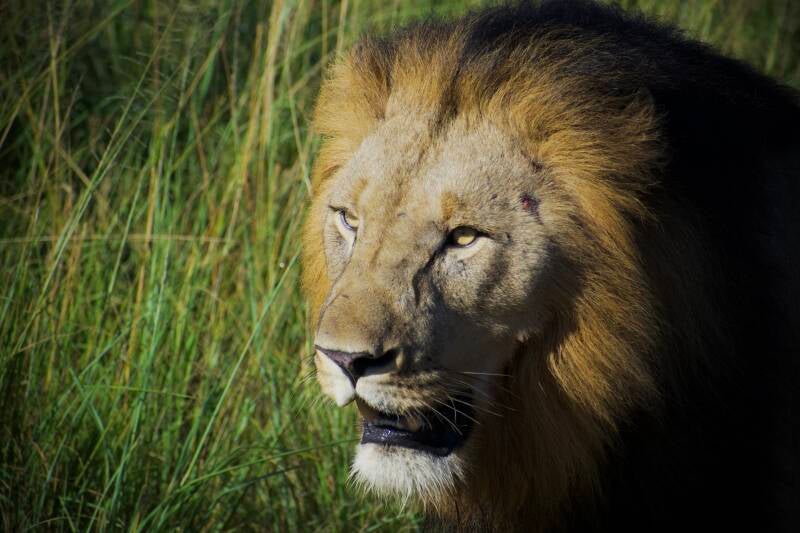
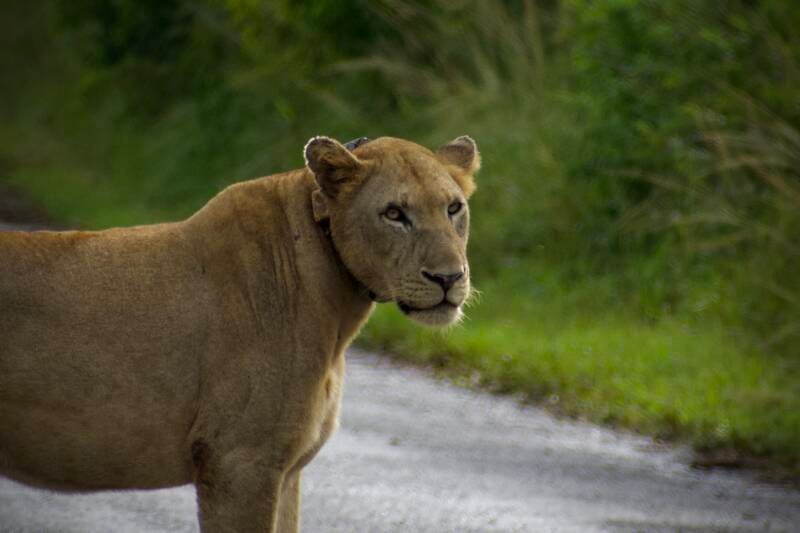
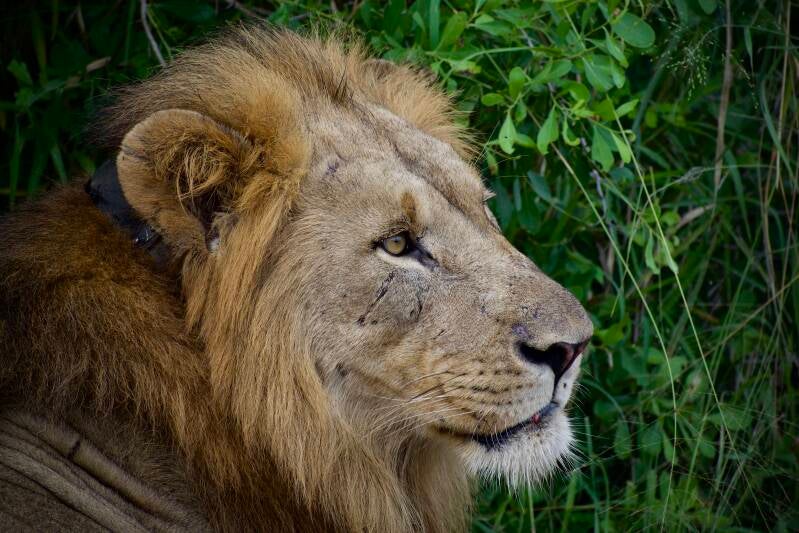
We immediately skipped everything else and drove straight to the location, and it paid off. A male lion walked right past our vehicle, just a few meters away, completely unfazed. Not far from there, a group of rhinos were relaxing in a waterhole, which honestly felt like we were already ticking off most of the Big 5 in one go.
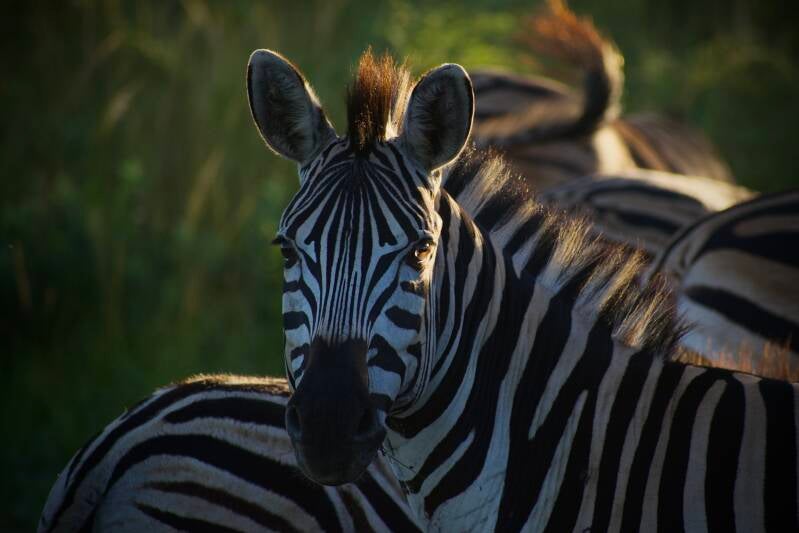
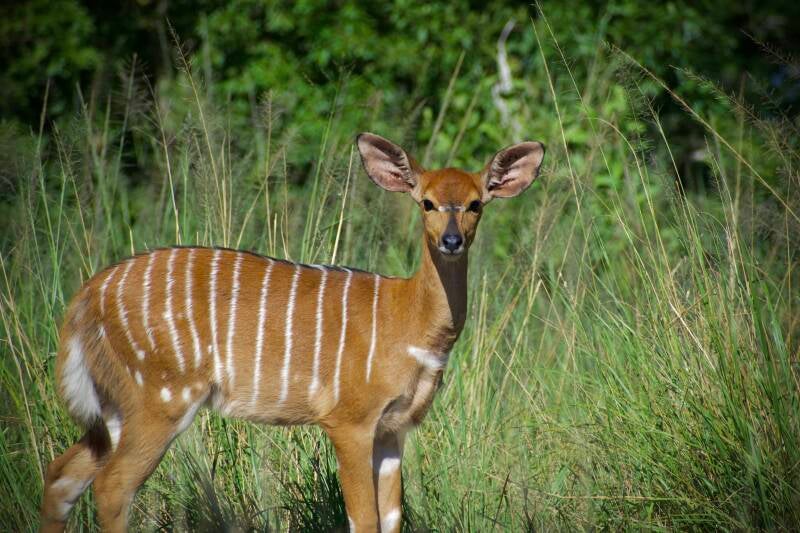
We also saw elephants and giraffes that day, though mostly from a distance. Still, getting to see four out of the Big 5 in a single day is already more than you can ask for. And of course, there were animals everywhere in between (zebras, nyalas, impalas, warthogs) basically a constant background of wildlife no matter where you looked.
Day 2: Self-drive Safari
Feeling slightly overconfident after day one, we decided to try a self-drive safari the next day, which, to be fair, is a completely different experience. We left again at 5 AM, and the drive to the park itself was… an adventure. Between unmarked speed bumps, pedestrians walking along the road in the dark, and drivers doing unpredictable things, you definitely need to stay alert. High beams are essential.
Once inside the park (entrance fee: 320 rand per person), we mostly stuck to the paved roads since we didn’t have a 4x4, but honestly, that didn’t limit us at all.
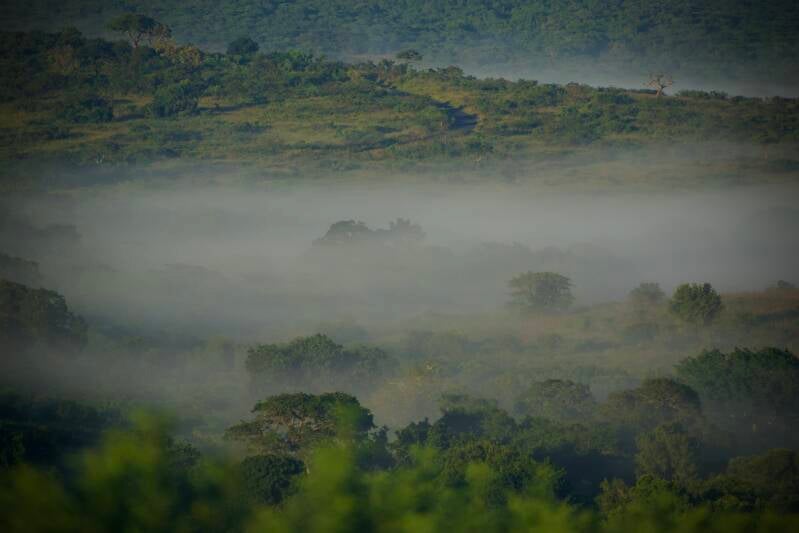
Wildlife was everywhere again, especially zebras, nyalas, and impalas, which seem to have a personal mission to block the road and stare at you while you wait.
At one point, we noticed several safari vehicles speeding past us, which is usually a clear sign that something interesting is happening. We followed, but arrived just a little too late: a carcass on the ground, about ten cars surrounding it, and no predator in sight. Classic timing.
We decided to move on and head back toward the Memorial Gate area, where we got lucky again and found the same lions from the previous day, this time even closer, especially one of the females.
By late morning, the heat started picking up, so we took a break at Hilltop Camp for coffee and some air conditioning (honestly, the main reason). We mostly brought our own food to save money, but it’s good to know there are options available if needed.
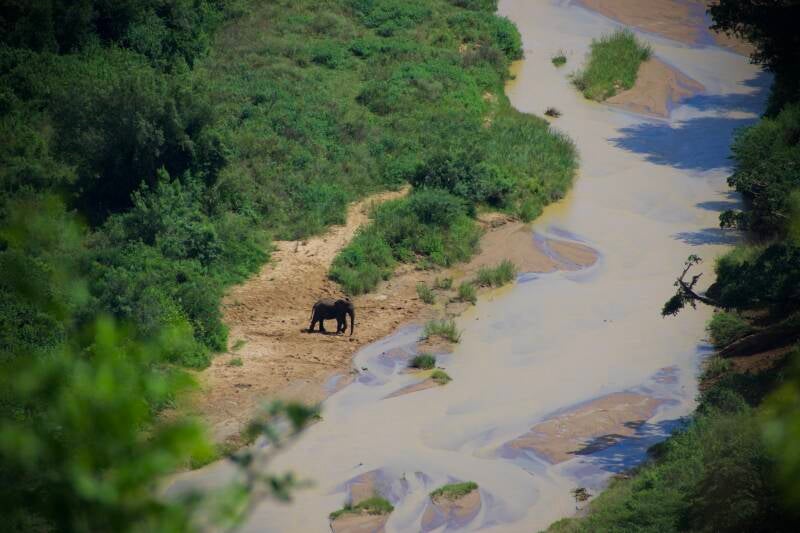
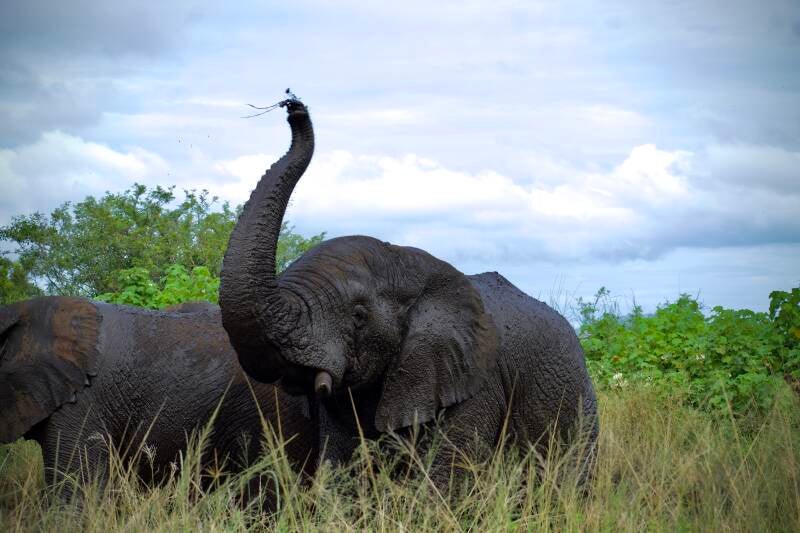
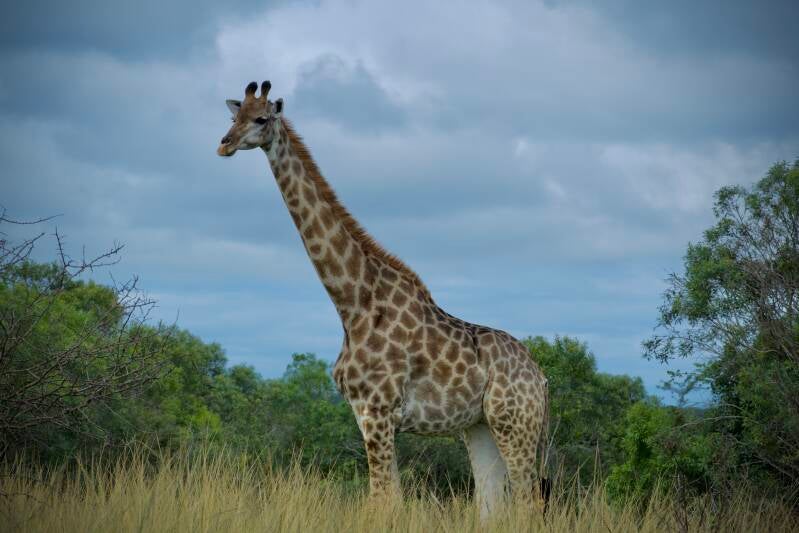
Someone tipped us off about elephants at a nearby waterhole, so of course we went to check it out, and it ended up being one of the best sightings of the trip. We watched them bathing, splashing, and throwing mud over themselves, all from a very close distance, completely undisturbed. Afterwards, we explored the southern side of the park before lunch (towards Cengeni Gate), where we saw multiple giraffes along the road.
After a break during the hottest part of the day (definitely necessary, animal activity drops a lot between 1 and 4 PM), we headed out again in the late afternoon.
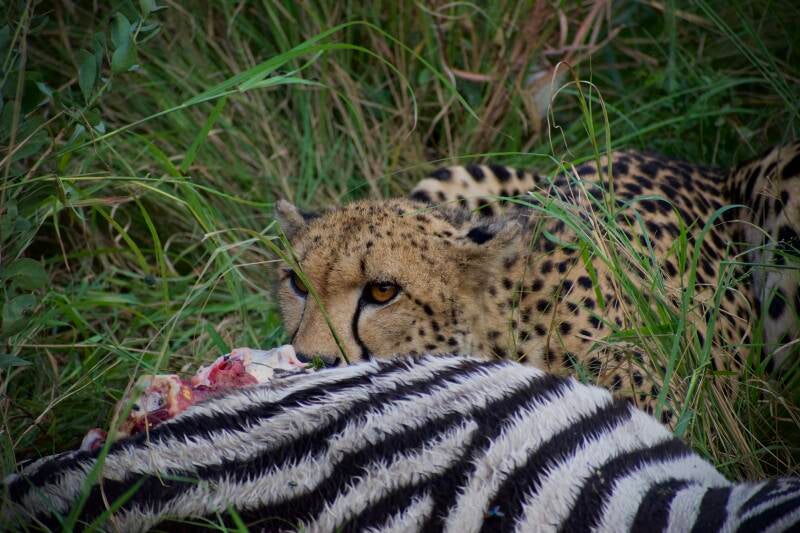
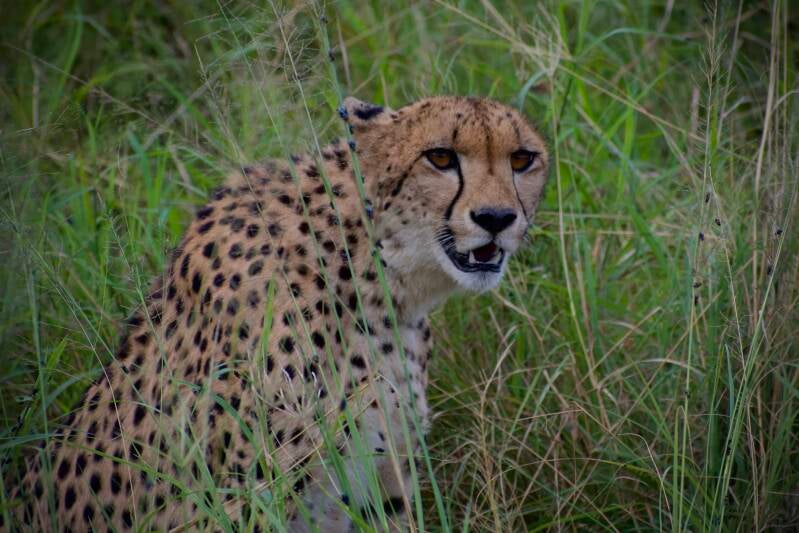
We decided to return to the carcass we had seen earlier, and this time, it paid off. A cheetah had finally shown up and was feeding on a zebra, which, while a bit brutal to watch, was also one of the most insane moments of the trip.
Of course, within minutes, word had spread and the area filled up with safari vehicles. At one point, the cheetah got spooked and disappeared, but we managed to catch another glimpse before heading out as the sun started to set.
Tips & Tricks
- Do a guided safari first, then self-drive
-
Best weather: sunny or overcast (rain = hiding animals)
-
Avoid 1-4 PM, it's too hot so animals disappear
-
There’s a gas station at Hilltop Camp
-
No alcohol allowed in the park (they check)
-
Always keep your entry ticket (they need it at the exit)
-
Best entry: Nyalazi Gate (closest to St Lucia). Most safari cars head towards the North area (Memorial Gate) as there are high chances to see rhinos. The Southern area is less crowded and you might get to see giraffes more up close.
-
Bring lots of water and snacks (we finished 5L easily)
-
Don’t get too close to animals, let them come to you
-
Follow safari cars… they usually know what’s up
-
Take a photo of the park map at the entrance to know where the picnic areas are
- There is a Facebook and a Whatsapp group for updates on sightings for visitors. Facebook: https://www.facebook.com/groups/hluhluweimfolozisightings/ and Whatsapp: https://chat.whatsapp.com/DLCWGPrKPLv1MgA0Ie6r6w
Final Thoughts
Hluhluwe-Imfolozi honestly exceeded all expectations. It might not have the name recognition of Kruger, but it absolutely delivers when it comes to wildlife sightings, and without feeling quite as overwhelming and expensive.
Doing a mix of guided safari + self-drive was the perfect combo. You get the expert knowledge first, then the freedom (and chaos) of exploring on your own. Two days felt just right for us, and we managed to see almost everything we hoped for, including some very close encounters.
If you’re looking for a Big 5 safari in South Africa that’s a bit more low-key but still seriously rewarding… this is it.
Create Your Own Website With JouwWeb