

St. Lucia & iSimangaliso Wetland Park
We decided to base ourselves in St.Lucia for a few days, mainly because it sits right in between two major wildlife areas: Hluhluwe–Imfolozi Park and iSimangaliso Wetland Park. Between the two, you get a pretty complete safari experience without having to move around too much, always a win when you’re on a tighter schedule.
Hluhluwe is where you go for the classic Big 5 experience: elephants, rhinos, lions, buffalo, giraffes, zebras, and if you’re lucky, even leopards, cheetahs or wild dogs. iSimangaliso, on the other hand, feels a bit more “underrated” and focuses more on the smaller and often overlooked species like hyenas, wildebeest, honey badgers, porcupines, snakes, and if you’re extremely lucky, leopards. There are elephants and a very small number of rhinos in the park too, but they tend to stick to the northern section, so sightings require a bit more luck.
On top of that, the area is also surprisingly good for herping, although, in our case, the snakes clearly didn’t get the memo.
How to Get There
Getting to St. Lucia is actually quite straightforward. From Johannesburg, you can find relatively cheap flights to either Durban or Richards Bay, usually for around $50-60 if you book in advance.
From there, renting a car is by far the easiest and most practical option. The drive to St. Lucia takes about an hour, and having your own car gives you complete freedom to explore both parks and the surrounding areas at your own pace.
We rented a car through Woodford Car Hire for two weeks, which cost us around 8000 rand in total (roughly €200 per person), including insurance and an extra driver. Honestly, this was one of the best decisions of the trip, trying to do this area without a car would make everything significantly more complicated.
Where to Stay
We stayed at Flamboyant Holiday Flats, which cost around 800 rand per night for two people. It was simple, but exactly what we needed, and having access to a kitchen made a big difference since eating out in South Africa can add up quickly if you’re not careful.
St. Lucia itself is a small, touristy town, but in a comfortable way. It has everything you need: restaurants, small shops, tour operators, without feeling overwhelming.
St. Lucia: What to Do
Even though St. Lucia is mainly used as a base for safaris, there’s actually quite a bit to do in and around town.
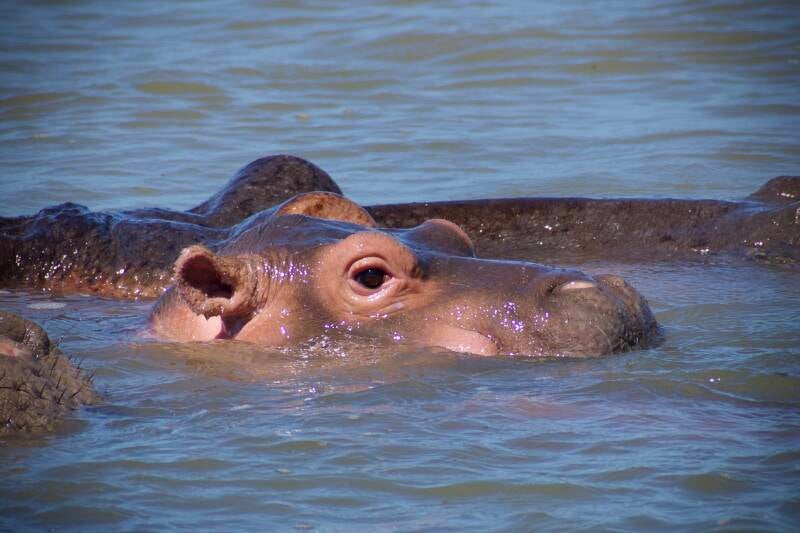
One of the highlights is the estuary boat tour, which costs around $20 and takes about two hours. It brings you surprisingly close to hippos in the water, often just a few metres away, and there’s also a good chance of spotting Nile crocodiles. If you’re lucky, you might even see baby hippos, which somehow manage to be both cute and slightly terrifying at the same time.
Book through GetYourGuide: https://www.getyourguide.com/en-gb/st-lucia-south-africa-l2266/st-lucia-hippo-and-crocodile-cruise-on-a-15-seat-vessel-t361455/?ranking_uuid=30d0eb71-7a11-47cb-b282-dc50dd97af44
Then there’s the thing St. Lucia is most famous for: hippos walking through town at night. Between roughly 6 PM and 11 PM, hippos regularly leave the water and wander through the streets, especially around areas like John Dory’s restaurant. You’ll notice it immediately when it happens, there’s usually a crowd forming and security keeping people at a distance. And yes, they look slow and harmless. They are not. Stay at least 30 metres away. Those warning signs are there for a reason.
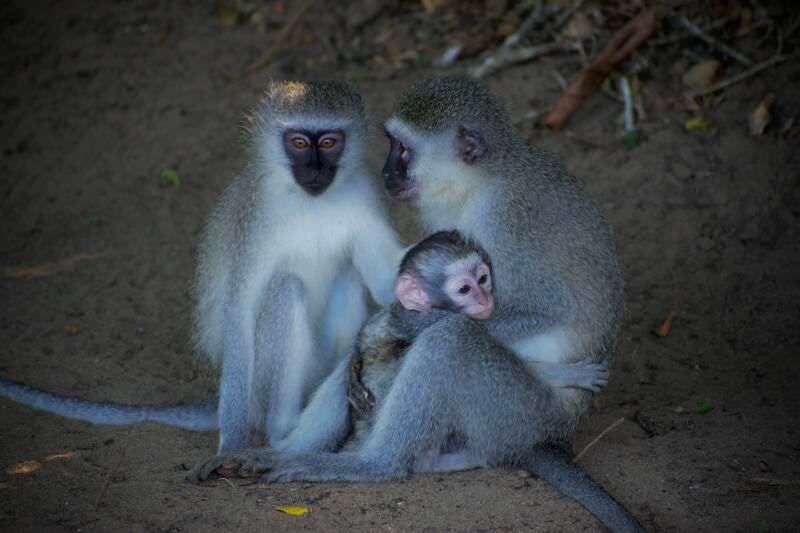
During the day, you can visit beaches like Ingwe Beach and Jabula Beach, both within walking distance via Beach Road. Just don’t bring alcohol, there are checkpoints, and they will check. At night, driving along Beach Road can actually turn into a mini safari, where you might spot bush babies, genets, honey badgers (honey badger don't care), and even zebras.
For something more relaxed, the estuary boardwalk is a great option. It’s about a 20-minute walk to the beach and is perfect for birdwatching, spotting monkeys, and possibly even crocodiles or the occasional snake if you’re lucky.
There’s also the Gwalagwala Trail, which is good for birding, but it’s best to avoid it in the evening since hippos tend to move through that area after dark.
We also booked a bird/snake tour for 30 dollars per person with a local guide which was super interesting. Ian can take you to different places in St. Lucia, and he's super knowledgeable about birds. You can contact him through Facebook: https://www.facebook.com/stluciabirdingtours/
iSimangaliso Wetland Park
iSimangaliso Wetland Park is a UNESCO World Heritage Site and one of the most diverse ecosystems in South Africa, combining wetlands, savannah, forest, and coastline all in one area. Just like in Hluhluwe, we decided to first do a guided tour, this time opting for a night safari with Heritage Safaris, which cost around $40 for a 3-hour tour.
Book through GetYourGuide: https://www.getyourguide.com/en-gb/st-lucia-south-africa-l2266/from-st-lucia-isimangaliso-wetland-park-night-drive-safari-t367855/?ranking_uuid=30d0eb71-7a11-47cb-b282-dc50dd97af44
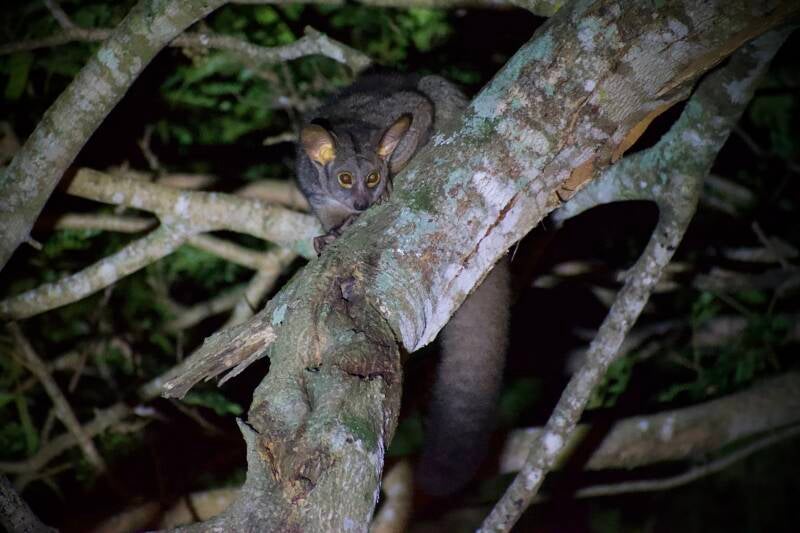
Night drives offer a completely different experience, and we were actually quite lucky. We saw hippos, elephants (with babies!), a hyena, waterbuck, a green water snake, bush babies, and owls. Seeing elephants in the southern section is relatively rare, so that already made the night special.
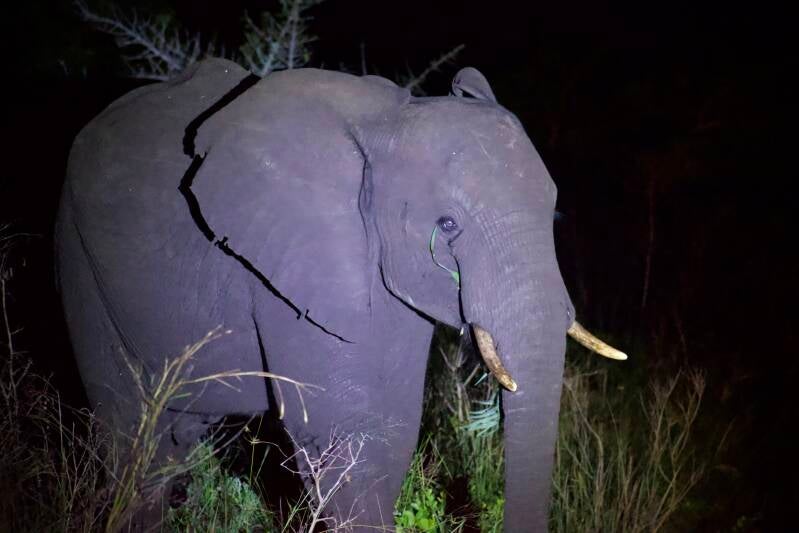
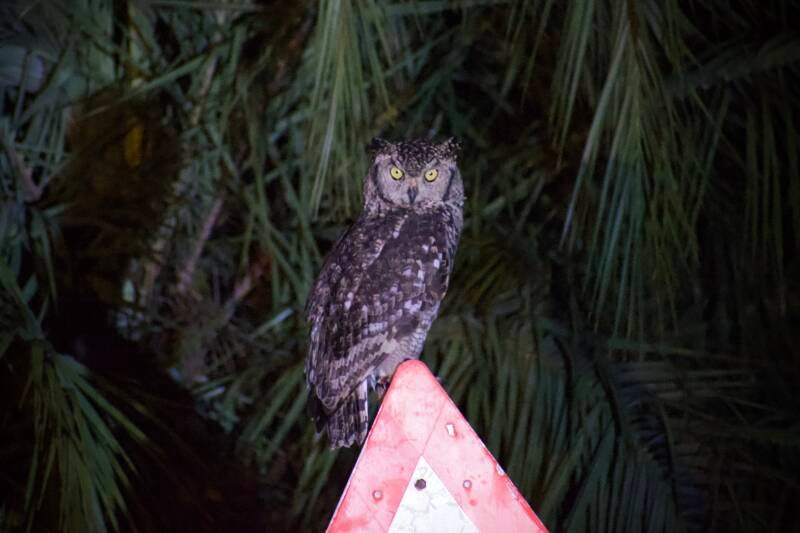
The next day, we decided to explore the park ourselves. Entry costs 130 rand per person and 70 rand per vehicle, and the park is open from 6 AM to 6 PM (until 7pm in summer). There’s essentially one main road running through the park, and within about 40 minutes you can reach the coastal side near Cape Vidal. Along the way, we saw wildebeest, kudu, mongoose, meerkats, and several monkey species.
And then, somehow, we hit the jackpot. A male rhino, a female, and their baby were standing right next to our car, completely unbothered. Considering there are only about six rhinos in the entire park, this felt ridiculously lucky.
At Cape Vidal, you can also snorkel during low tide (best during low spring tide), and the area is known for sightings of electric rays, although we didn’t spend too much time in the water ourselves.
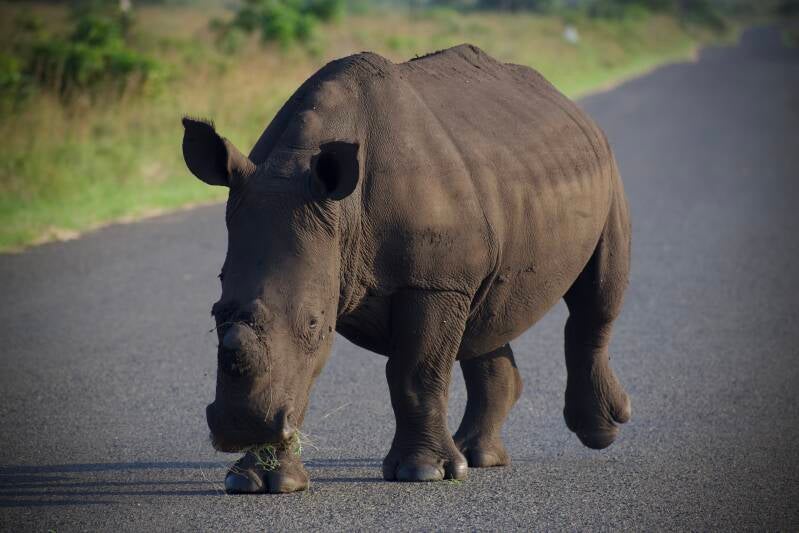
The 7-Hour Elephant Situation
What was supposed to be a normal drive back from the wetland park after our day visit to St. Lucia turned into… something else entirely. We ran into the same group of elephants we had seen the night before. At first, we were excited. More elephants, great.
Except they were standing on the only road out of the park.
And they stayed there. For seven hours.
This time, the mood was completely different. One bull in particular was clearly agitated, swaying, flaring ears, watching every movement. It was obvious something had happened earlier that had put the group on edge, and with babies around, they were extremely protective.
Then, someone decided it would be a good idea to start a fire to scare them away.
It was not a good idea.
The elephants became even more stressed, and at one point the bull charged towards the cars, causing panic. Cars started reversing, people didn’t know where to go, and at some point the car in front of us even hit our rental. At one point, that same person actually tried to drive through and hit one of the elephants. The elephant wasn’t injured, but the situation escalated even further.
We eventually drove to the ranger hut for help, only to be told… to wait it out. So we waited. In the dark. Listening to elephants moving around us, making sounds straight out of Jurassic Park, while standing behind what was essentially a fence made of thin metal wires.
At some point, everything went quiet. We thought they had left. We headed towards the main road again. They hadn’t. It was just another group hanging around the ranger's hut.
By 2 AM, we were done. Completely exhausted, stressed, and honestly a bit scared. As a group of cars, we decided to move together and try to push through slowly. After a few more warning charges, the bull finally moved off into the bush.
Knowing elephants can’t run much faster than ~40 km/h, we took the chance and drove through. Somehow… it worked. We made it out. Shaken, tired, slightly traumatised, but out.
We even saw a porcupine on the way out, which under normal circumstances would have been very exciting, but at that point we collectively decided: not today.
Unexpected Wildlife Moments (aka: when you’re not even trying anymore)
As if the elephant chaos wasn’t enough excitement for one trip, we somehow still managed to have a few of those “this cannot be real” wildlife moments.
One of them was actually pretty small, but for me just as exciting: we found a baby python along the road during one of our night drives. Just casually there, minding its own business. For a moment it felt like the herping gods had finally decided to throw us a bone after being very quiet the rest of the trip.

But the real highlight came when we had already kind of accepted that we probably wouldn’t see a leopard.
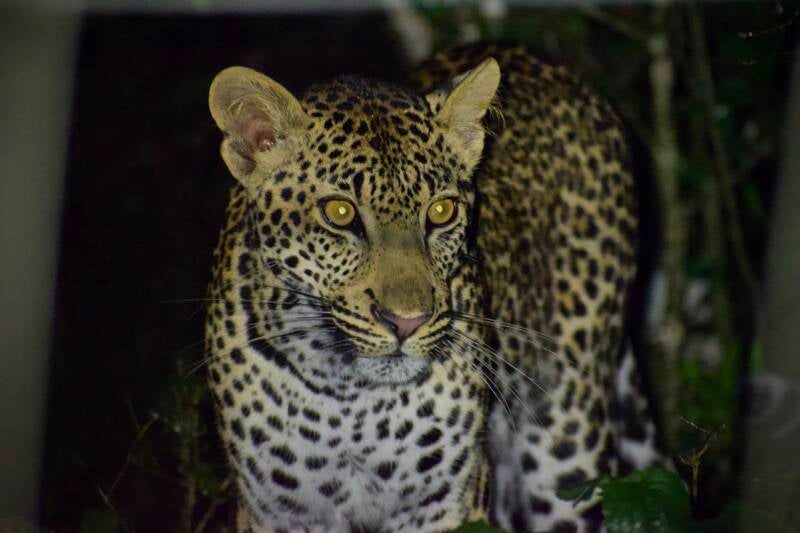
We were driving at night again, not even for big mammals this time, just slowly scanning the roadside for snakes, when I suddenly noticed something move in the bushes. At first, I wasn’t even sure what I was looking at, but then it clicked.
A leopard. Just sitting there. A few metres away. Completely unbothered.
It genuinely felt like our “giant anteater moment” all over again (if you’ve read the North Pantanal blog, you know exactly what I mean). That same feeling of this is so random it almost doesn’t feel real. We turned off the engine and just sat there for about 10 minutes, watching her. She was relaxed, licking herself, yawning, completely ignoring us. No other cars, no noise, no chaos, just us and a leopard in the dark. That moment completed the Big 5 for us.
And somehow, as if that wasn’t enough, we saw her again the next day. Same individual, a juvenile female, still hanging around the area like she owned the place (which, to be fair, she did).
Naturally, I named her FluffySpots.
At this point, our mammal luck is getting a bit suspicious.
Final Thoughts
St. Lucia and iSimangaliso are absolutely worth visiting, especially if you combine them with Hluhluwe-Imfolozi Park. The variety of wildlife, the mix of ecosystems, and the ability to self-drive make it a really rewarding destination.
At the same time, this experience was also a strong reminder that these are wild animals, not a zoo. Things can change quickly, and situations can escalate if people don’t respect boundaries.
Would I do it again? Yes.
Would I underestimate elephants again? Absolutely not.
For any tips on herping in St. Lucia, don't be afraid to contact me!
Create Your Own Website With JouwWeb