

A couple of months ago, I got accepted for a job in Sodwana Bay, South Africa, working in shark conservation.
I was genuinely excited. After working in marine conservation across different countries, I was looking forward to being back in the water, contributing to research, and building on my experience with field methods and training. On paper, it ticked all the boxes: diving, conservation, education. Also, I had never been to South Africa before, so it felt like a pretty great opportunity.
I didn’t expect to leave a few weeks later.
This is my honest experience working as a field method trainer at Sharklife.
What Sharklife is Supposed to Be
Sharklife is presented as one of Africa’s longer-standing marine conservation organisations, focused on shark conservation, research, and education. The internship program promises hands-on experience, real field skills, and involvement in ongoing scientific work.
At least, that’s what it says online.
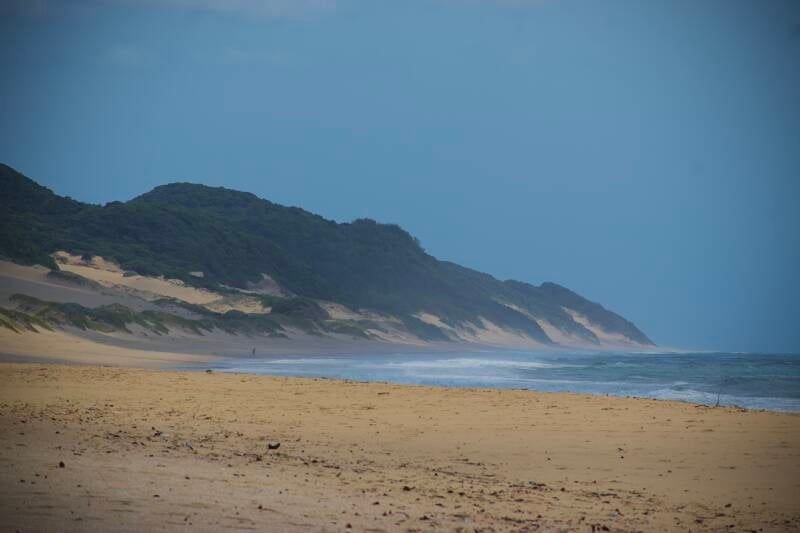
Sharklife is based in Sodwana Bay, in KwaZulu-Natal. It’s a small, slightly chaotic dive town that somehow still manages to be charming. Sand roads, dive bakkies everywhere, and a constant rotation of divers coming in and out.
There isn’t a huge amount to do, but that’s also the appeal. It’s quiet, surrounded by nature, and the ocean is always right there. Sodwana is known for its reefs and ragged-tooth shark aggregations, and it delivers. Seeing 30-50 raggies on a single dive never really gets old.
What I Was Hired For
In theory, I was hired as a field methods trainer. That meant leading and teaching standardised marine survey methods, things like roving diver techniques, CoralWatch, data collection, and helping interns develop actual field skills. Diving would be part of it, of course, but it wasn’t meant to be a full-time divemaster role.
The first two weeks? Honestly, I was kind of in heaven.
I was back in the water, diving regularly, surrounded by sharks, and I thought I had landed somewhere where I was going to learn a lot and grow professionally.
That feeling didn’t last very long.
Gradually, things started to feel… off. Small things at first, then bigger ones. And over time, I found myself getting more and more mentally and physically drained.
Safety and Operations
This was the biggest issue for me.
About two weeks after I arrived, a fire broke out in the dive centre. We woke up at 3am to the sound of cylinders exploding. Everything burned, including my own gear. That alone was a lot to process. Not just the loss of equipment (which is expensive enough), but also personal items, like my DSMB, which had messages and drawings from people I’d met over the years. Gone overnight.
Everyone got out safely, which is what matters most. But the aftermath… wasn’t handled well.
There was very little support. Dive operations resumed within two days, while people were still in shock. Interns decided to take time off to recover. Staff didn’t really have that option. Losing all your gear was treated as something that just… happens. No real acknowledgement, no support, just back to work.
Even now, I still notice myself freezing a bit when I hear loud noises.
My full experience: Around two weeks into my time at Sharklife, a fire broke out in the dive centre due to negligence. The fire affected the main operational area where all dive gear, cylinders, and two boats were stored. During the night of the fire, we woke up around 3 AM to the sound of cylinders exploding, which was a pretty intense situation to experience firsthand. The consequences were immediate:
-
Most of the operational equipment was destroyed, including scientific materials used for surveys (such as BRUV setups)
-
Personal gear, including my own newly purchased dive equipment, was lost in the fire
-
Diving operations were halted only briefly
Despite the scale of the incident, interns were given a week off, while staff were expected to return to work and diving within two days. This included:
-
Using a boat that had not been in use for a long time
-
Diving with borrowed or incomplete gear
-
Continuing work without clear scientific objectives due to the loss of research equipment
There was no financial compensation offered for lost personal gear. The explanation given was that only part of the equipment was insured. At the same time, it was communicated that management had also lost equipment and were therefore “equally affected.” Operationally, this period felt disorganised and unclear, as we were continuing work without the usual structure or resources in place.
Beyond that, dive operations often felt rushed and not aligned with what I would consider safe, professional standards.
There were multiple situations where:
-
conditions weren’t ideal
-
equipment wasn’t fully sorted
-
planning felt incomplete
…and dives still went ahead.
Over time, it started to feel like risk was something you were expected to accept, rather than actively minimise.
This became more personal when I was recovering from a concussion. Returning to diving after a head injury from an accident on the boat should be gradual and cautious. Instead, I found myself in situations where I didn’t feel fully comfortable, but didn’t feel like I had much space to say no.
A major turning point was my first day back in the water, when part of the boat literally broke during operations. It could have gone very wrong.
The next day, when I said I didn’t feel comfortable diving on the same boat, the conversation quickly turned into me “questioning judgement” rather than a discussion about safety.
That was the moment I realised I didn’t feel safe speaking up.
My full experience: A second incident occurred during a boat operation and was also related to preventable safety issues. While retrieving a metal BRUV structure that had been mounted on a pole, the setup was not properly secured. Only the top of the structure had been tied down, which caused it to move freely with the motion of the boat. When the boat hit a wave, the structure swung and hit me directly on the head, resulting in:
-
Immediate bleeding
-
A head wound
-
Symptoms consistent with a concussion (headache, nausea, disorientation)
Following the injury, the response was delayed. Instead of returning to shore immediately, the decision was made to continue the surveys, while I remained on the boat with a bandage to control the bleeding. By the time we returned, it was too late to receive stitches for the wound. In the days following the incident:
-
I experienced a concussion lasting approximately two weeks
-
Symptoms included short- and long-term memory issues, headaches, and inability to concentrate
-
After two days, I was asked whether I would be able to return to work
This made it difficult to properly recover before resuming responsibilities.
Shortly after returning to work following the concussion, another safety-related incident occurred. With the pontoon coming loose from the boat during operations, given everything that had happened in the previous weeks (the fire and my head injury), my concerns were reinforced about overall equipment safety and maintenance.
Because of this, I communicated clearly that I did not feel comfortable going back out on the boat the following day unless I could be confident that the issue had been properly resolved. I had been told that the repair was completed within a single day, but given the circumstances, I wanted to take a step back until I felt safe to return. The response to raising this concern was not constructive. The situation escalated, and the feedback I received focused on questioning authority rather than addressing the safety concern itself. I was told that I did not have a choice in whether I would return to the boat.
At that point, I disagreed. After the previous incidents, I felt it was reasonable to set a boundary regarding my own safety, and I chose not to go out until I felt confident in the conditions.
Following this, I was stripped of my responsibilities, which effectively ended my role in day-to-day operations. This sequence of events ultimately led to my decision to leave.
During intern dive training, safety also wasn’t emphasised the way I believe it should be. I’m a careful diver. I like structure, clear briefings, proper checks, the boring stuff that keeps people safe. The standards I saw didn’t match that.
And that’s not just a personal preference, if people aren’t trained properly in safe diving practices and then move into dive jobs, that can become a real problem later on.
Research vs Reality
Another big disconnect was the “research” aspect. Sharklife presents itself as a research-focused organisation. That was a major reason I applied.
In reality, there was limited involvement in meaningful scientific work. For interns, most of the time was spent on repetitive fish identification (basically every single day). Useful, sure, but very narrow. There were far fewer opportunities than expected to engage in broader research methods, data collection, or analysis. For me personally, despite being hired for a specific role, I was mostly used as a divemaster. Which… wasn’t really the point of the job.
Some of the educational materials and reports also appeared to rely heavily on generic or pre-generated content, rather than being grounded in detailed, site-specific scientific work. For a programme presented as research-driven, this was surprising.
Role Clarity (or lack of it)
There was also a general lack of structure when it came to roles and responsibilities. The line between staff and interns was often blurred, which led to confusion, both above and below water.
At times, interns were close to being given responsibilities that should sit with trained staff. For example, letting interns DM dives because there isn’t space on the boat for staff should not be happening. In my opinion: no staff = no diving.
Clear roles are not optional in a dive environment. They’re essential.
Team Dynamics
One thing I do want to highlight, because it genuinely mattered, is the team. My colleagues were, without a doubt, the best part of my time there.
From the start, they were supportive, open, and had my back. In a short amount of time, we built a really solid dynamic. They helped me get involved in things I was actually hired to do, giving me opportunities to work with RUVs and BRUVs, sharing knowledge, and generally making a difficult situation a lot more manageable. Honestly, they were the main reason I considered staying as long as I did.
With some of the interns, it was a bit different. I tried to connect, but we weren’t always on the same page. At times, it felt like there was already a certain perception of me that made it harder to build that mutual respect. Not necessarily anyone’s fault, but it did add to the feeling that I didn’t quite fit into the wider dynamic.
The Decision to Leave
In the end, everything built up. The safety concerns, the lack of structure, the mismatch between expectations and reality, and the general feeling of not being able to speak up without it turning into something else.
At some point, it just became clear: I didn’t feel comfortable continuing, physically or mentally. And in this line of work, that’s not something you ignore.
Leaving wasn’t easy, especially so soon after arriving. But it felt like the right decision.
What I’m Taking from This
This experience wasn’t what I hoped it would be, but it did teach me a lot.
It reinforced how important it is to:
-
trust your instincts
-
take safety seriously
-
and pay attention when something doesn’t feel right
It also made me think about the kind of environments I want to work in moving forward: places where communication is open, roles are clear, and safety isn’t something you have to argue for.
Final thoughts
This wasn’t an easy thing to write, but I think it’s important to be honest about both the good and the difficult sides of working in conservation and dive operations.
For anyone considering a similar path:
Ask questions.
Trust your gut.
And don’t ignore it when something feels off.
Add comment
Comments