

Isla Holbox
When I was planning my Mexico itinerary, Isla Holbox wasn’t actually supposed to be a major stop. I already had Isla Mujeres on my itinerary, where I was planning to go whale shark watching, so I figured one island was enough.
But because I apparently don’t trust fate, I decided to add a couple of days in Holbox anyway. The reasoning was simple: if my attempts to see whale sharks around Isla Mujeres failed, Holbox would give me another chance.
A contingency plan.
A backup island.
A place I could easily skip if everything went perfectly.
Well… Thank god I went.
Because Isla Holbox ended up being one of my favourite stops in Mexico. The atmosphere was just there. It was much more relaxed than Isla Mujeres, less hectic, and somehow felt like an actual little island rather than a destination that had been completely taken over by tourism.
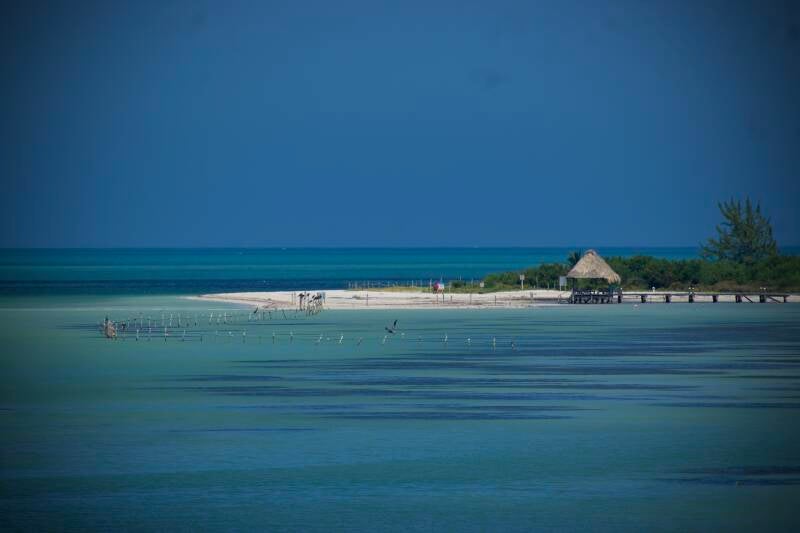
And then there was the wildlife. I swear, the second my feet touched the island, I became a full-time birder. I arrived, saw some flamingos from the ferry, and apparently decided that my holiday was now a scientific expedition. Holbox is a weird and wonderful combination of white sandy beaches, clear turquoise water, mangroves, mudflats and surprisingly abundant wildlife. Some parts of the island are still relatively untouched, and I mean still untouched, because you can tell tourism is slowly creeping further into the island.
I absolutely loved exploring the less-travelled parts of it. Even if that occasionally meant being knee-deep in mud in the middle of a mangrove. Because apparently that’s my idea of fun.
How to Get There from Valladolid
Getting from Valladolid to Holbox is relatively straightforward. The first step is getting to Chiquilá, the small port town where you’ll catch the ferry to Isla Holbox.
I took an ADO bus from the main bus station in Valladolid. The ticket cost around 300 MXN when bought in person, while booking through Busbud was approximately €17.
I’d recommend booking this bus in advance if you know your travel dates. There aren’t endless departures, and it’s much easier to have your ticket sorted before you arrive at the station.
The bus station in Valladolid was also much more organised than the one I experienced in Cancún. They actually have a screen showing which buses have arrived, which is surprisingly useful when you’re standing there wondering whether the bus you’re waiting for is the one currently sitting outside.
The journey from Valladolid to Chiquilá takes approximately 2 hours. And, once again: bring a sweater.
I know. You’re going to a tropical island. You’re probably wearing shorts. It’s going to be approximately 35-40°C outside. But the ADO bus will still somehow be approximately -7°C. I had already learned this lesson on the Cancún-Valladolid journey, but apparently I needed a reminder. Long trousers and a sweater are your friends.
Once you arrive in Chiquilá, getting to the ferry terminal couldn’t be easier. It’s literally about a two-minute walk from the bus stop.
There are several ticket booths at the ferry terminal, including Holbox Express and 9 Hermanos. You can simply check which ferry is leaving first and buy your ticket there.
Ferries generally run every 30 minutes to an hour, depending on the schedule. A return ticket cost me around 600 MXN, and you can pay by either cash or card.
Unlike some of the buses, you don’t necessarily need to book this one in advance. The boats generally don’t fill up immediately, so you can simply buy your ticket when you arrive. The crossing takes approximately 20 minutes.
To get back to Cancun, you can either take a bus (ADO) or a colectivo, costing 350 MXN. The colectivos will be waiting at the roundabout directly at the ferry exit. Both take around 3 hours, and will drop you off at the ADO bus station in the centre or the Soriana Super across the street.
Where to Stay
I stayed at Mapache Hostel, where I paid around €50 for three nights.
Overall, it was perfectly fine for the price and the location was really convenient. It’s close to the centre, within walking distance of restaurants and shops, and not far from the Chedraui supermarket. And when I say Chedraui was huge, I mean huuuuuge. You can find pretty much everything you need there, which is particularly useful if you’re staying somewhere with a kitchen or want to stock up on snacks and drinks.
There were a couple of things about the hostel that weren’t quite as ideal. Once again, air conditioning was not available throughout the day. Mexico apparently decided that I needed to develop resilience. And Holbox was HOT.
The hostel also had around six volunteers staying there who seemed to basically live at the hostel, using the kitchen and common areas throughout the day. It wasn’t a huge problem, but it did make it a little harder to use the common areas when I wanted to cook or just do my own thing. Still, for the price and location, I was happy enough.
And obviously… There was a cat. So everything was immediately better.

How to Get Around Isla Holbox
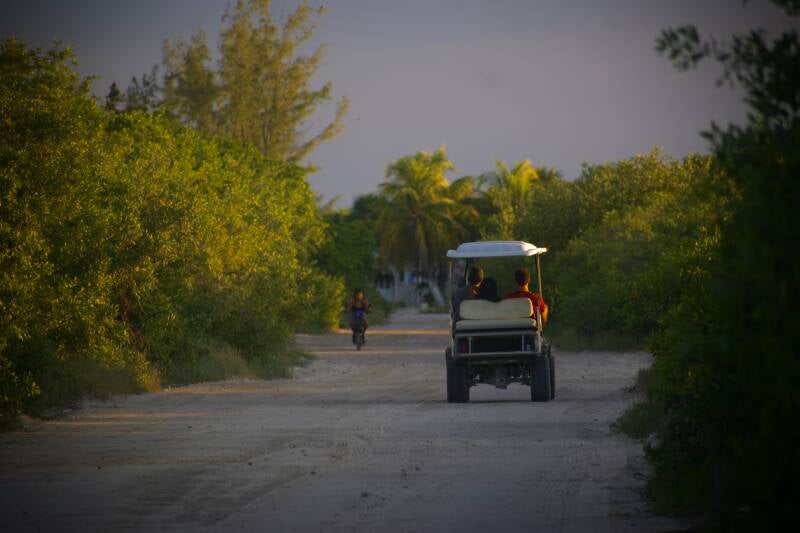
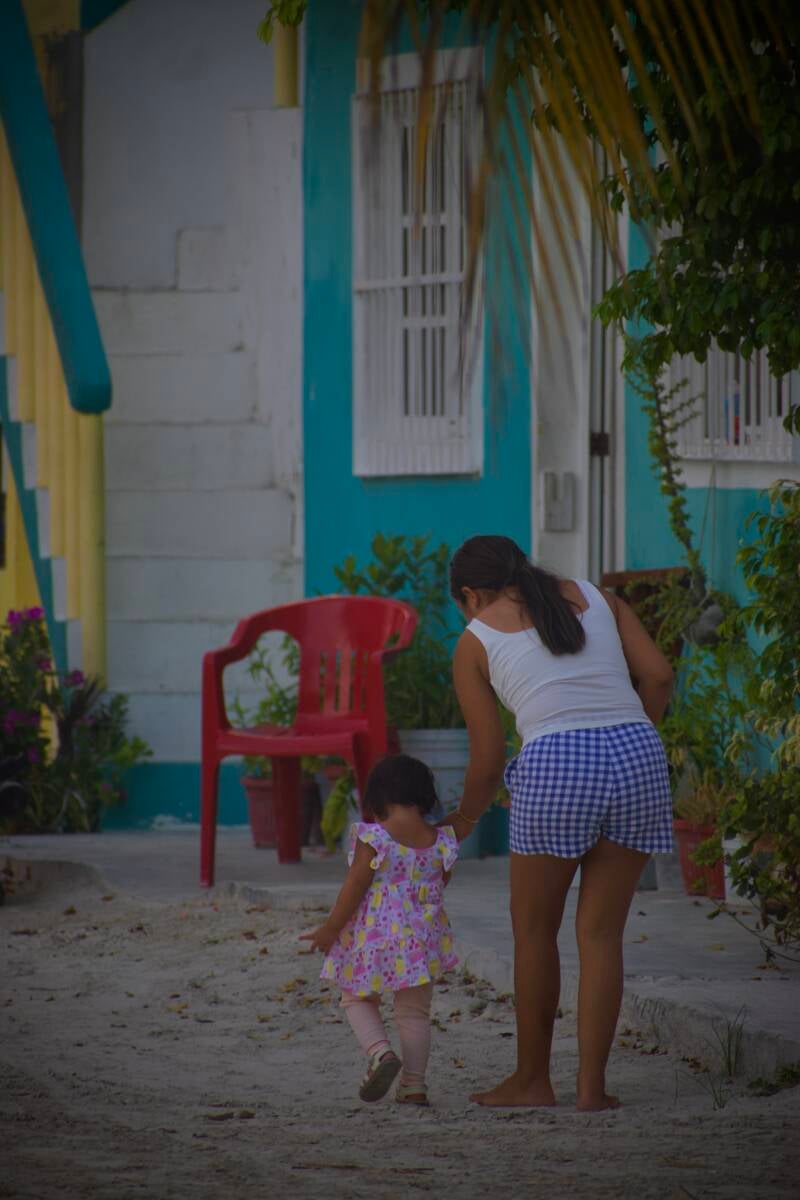
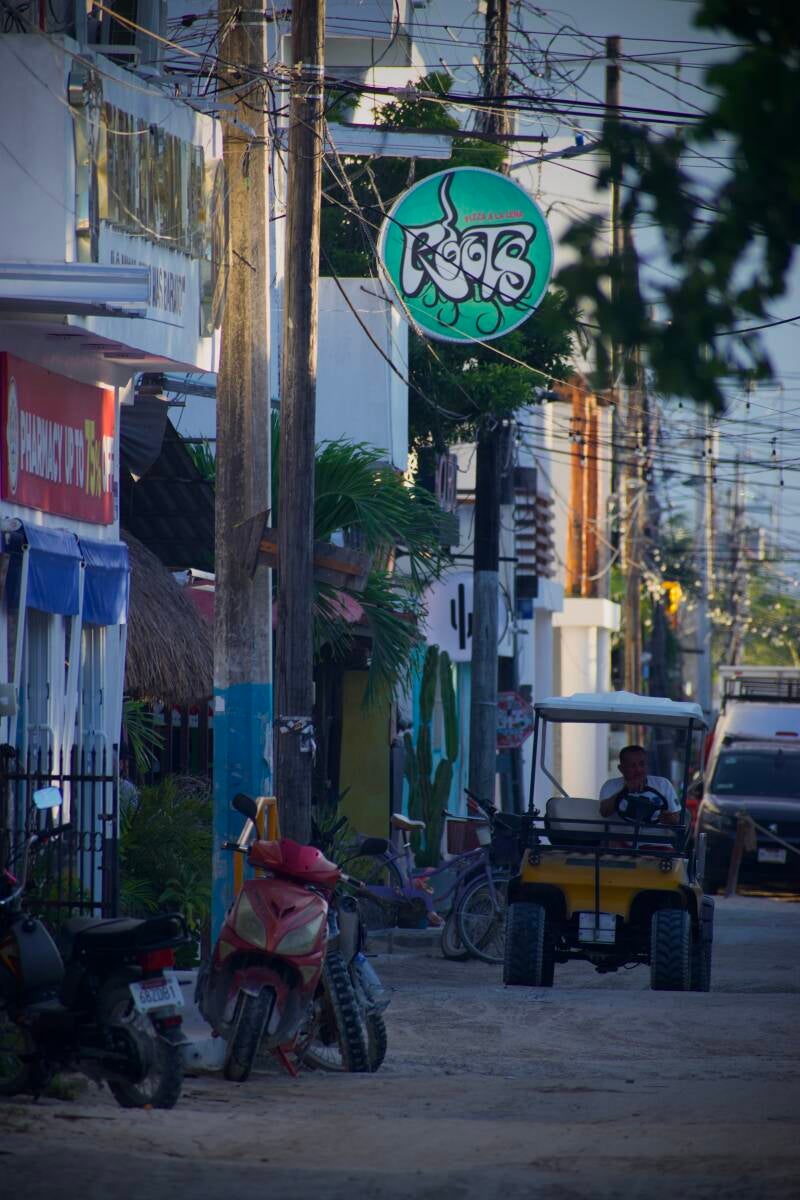
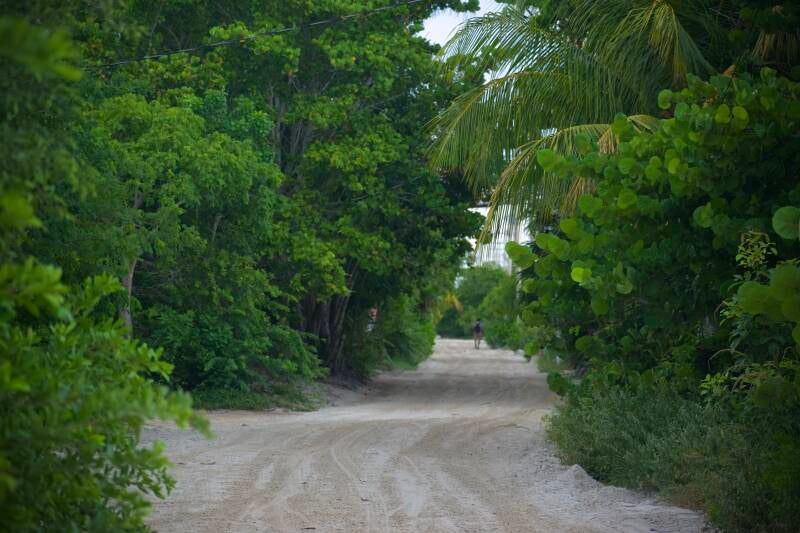
One of the things that makes Holbox feel different from many other Mexican destinations is that there are no cars on the island. Instead, you’ll mostly see people getting around by golf-cart-style vehicles, four-wheelers and quads because the streets are basically just sand and mud.
These also function as taxis. A short taxi ride around the centre can cost around 50 MXN, while longer journeys to places such as Punta Cocos can cost closer to 200 MXN. You can also rent bicycles for approximately 200 MXN per day.
Personally? I walked everywhere. Holbox isn’t enormous, and walking gave me much more freedom to explore. And that turned out to be particularly useful because I rarely walked somewhere with the intention of simply getting from A to B. There was always something to investigate.
A bird.
A mangrove.
A suspicious-looking puddle.
Another bird.
A crab.
Basically, if you’re interested in wildlife, walking is a pretty good way to explore Holbox.
Things to Do
Explore the Centre of Holbox
The centre of Holbox is small but full of life. You’ll find plenty of restaurants, cafés, little shops, colourful buildings and the obligatory collection of boho clothing stores that seem to exist on every Mexican Caribbean island.
The town sits right alongside Playa Holbox, so you can easily combine exploring the streets with a walk along the beach. It’s also a nice place to simply slow down. Grab some food, get a coffee, wander around and see where you end up. There isn’t really a need to have every hour planned.
Become a Birder
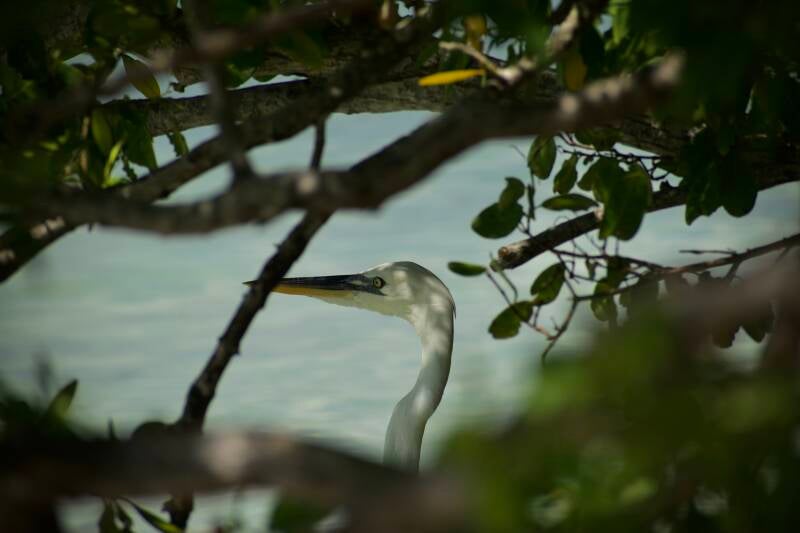
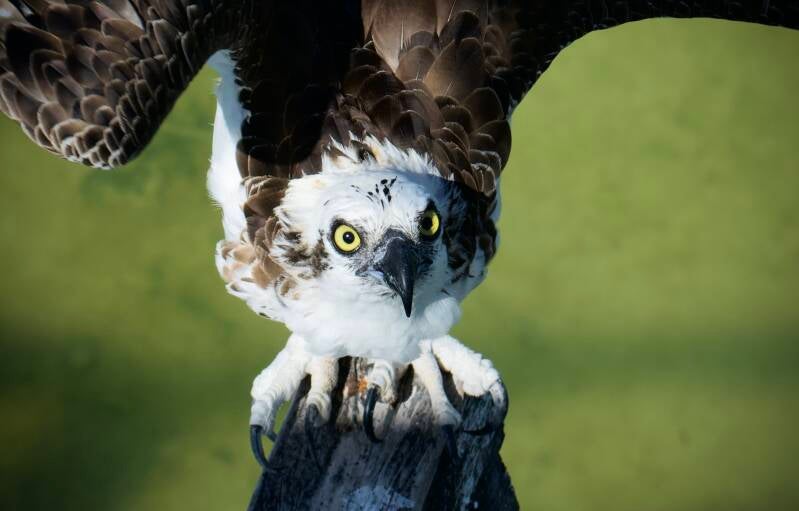
Okay, this one might not be for everyone. But if you’re remotely interested in wildlife, Holbox is fantastic. The island contains a mixture of coastal habitats, mangroves, beaches, mudflats and shallow lagoons, making it a great place for birds.
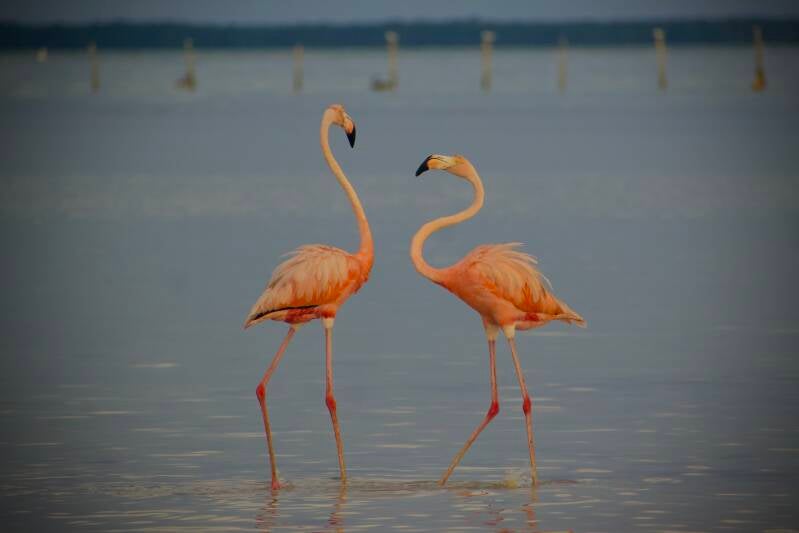
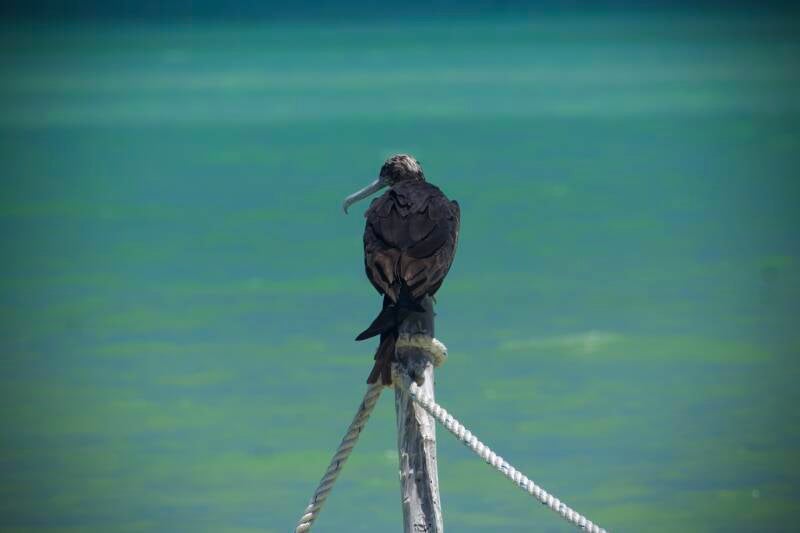
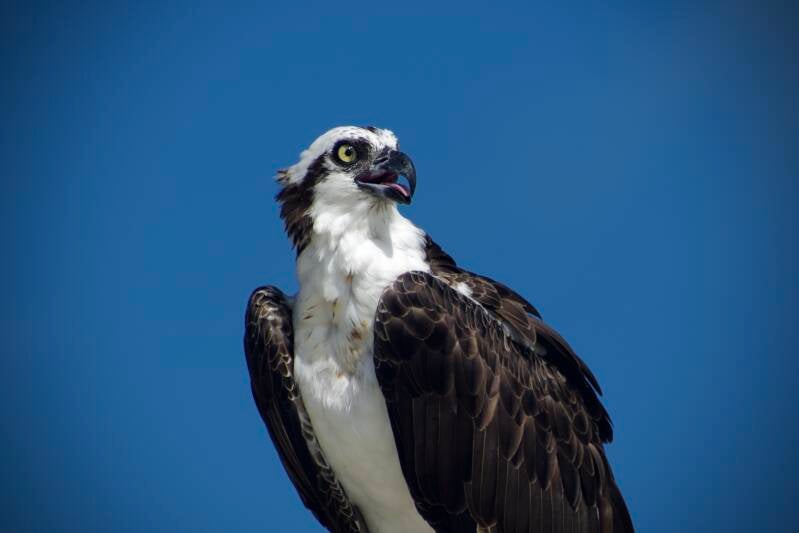
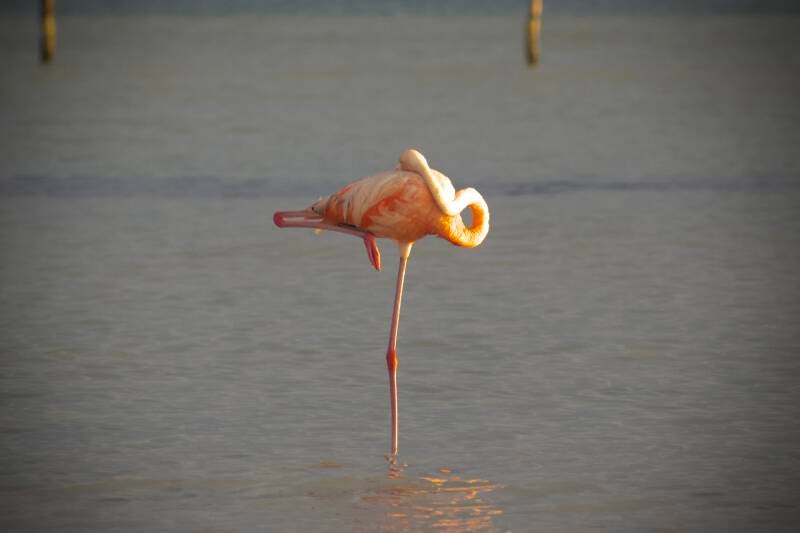
You’ll find everything from shorebirds and waders to pelicans, herons, ospreys and, of course, the famous Caribbean flamingos.
And I became completely obsessed. The first thing I did after getting off the ferry wasn’t check into my hostel. It wasn’t even really unpacking. I’d been on the island for approximately one hour when I saw flamingos standing at the edge of a mangrove area. Naturally, I had to investigate. There was just one small problem, there wasn’t really a path. So I crawled through thick mangroves and waded through knee-deep mud to get closer.
Was this a sensible thing to do? Probably not. Did I do it anyway? Obviously.
I even managed to completely destroy a perfectly good pair of shoes in the process. Worth it. I ended up being completely alone because, quite understandably, no other tourist had decided that crawling through a mangrove swamp was a good afternoon activity. It was actually one of my favourite wildlife experiences on the island. That said, I wouldn’t recommend copying me. I have a background working in mangroves, so I’m relatively comfortable navigating this kind of environment and know that you need to be aware of things such as snakes and other potentially dangerous wildlife.
There are also much easier and safer places around Holbox where you can see flamingos without sacrificing your shoes. So you don’t need to recreate my questionable decision-making.
Punta Cocos
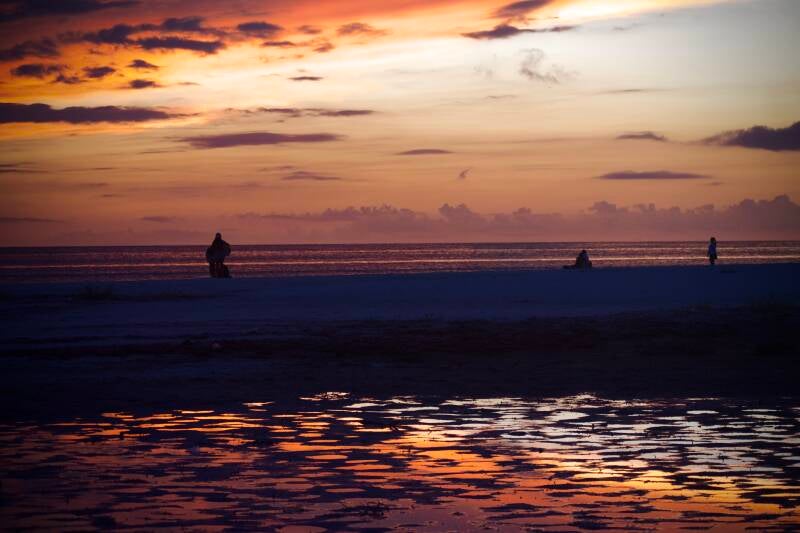
If you’re looking for a beautiful place to watch the sunset, head towards Punta Cocos, on the western side of Holbox. There’s a long stretch of beach here, and it becomes particularly beautiful during golden hour. And yes, there are flamingos around here too.
If you happen to get the combination of flamingos, calm water and golden sunset light… It’s pretty spectacular. This ended up being one of my favourite evenings in Mexico. I sat there watching the sun go down over the water, surrounded by birds, and honestly… I may have shed a tiny tear. Mexico really saved one of the best sunsets for the end of my trip.

Punta Mosquito
Punta Mosquito is often described as one of the most beautiful beaches in Holbox. Whether it’s the most beautiful is obviously subjective. But it is pretty spectacular.
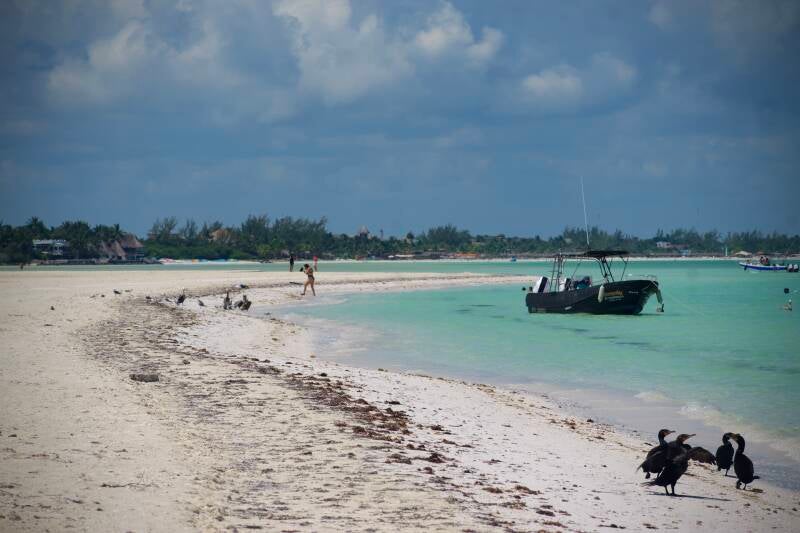
The area is known for its long sandbanks, shallow turquoise water and abundant birdlife. The good news is that you don’t necessarily need to book a tour to get there. You can walk part of the way yourself. Although calling it a “walk” is perhaps being generous. Once you reach Las Nubes de Holbox, you can head into the water and follow the sandbank towards the Área de Protección de Flora y Fauna Yum Balam.
Yes.
Into the water.
You basically walk through the shallow water along the sandbank. However, you can’t continue all the way into the protected Punta Mosquito area anymore because sections are closed for bird conservation. Please respect the barriers and don’t enter restricted areas.
The tides are also extremely important. I went around low tide, and even then the water sometimes reached the top of my thighs. And the walk takes around 20 minutes in full sun.
So bring:
- Plenty of water
- Sunscreen
- A hat
- Something to protect yourself from the sun
- And, in my case, Gatorade because apparently I was training for an Olympic event
It’s worth it, though. The area is fantastic for birdwatching, and from behind the barrier you can see a whole bay filled with flamingos. If you visit at the right time of year, you may even see flamingo chicks. Which is, obviously, adorable.
Take a Three-Island Boat Tour
If you want to explore more of the surrounding area, another option is a three-island boat tour.
I booked one that visited:
- Isla de la Pasión
- Isla de los Pájaros
- Punta Mosquito
I paid around €30 through GetYourGuide.
While these tours aren’t exclusively for birdwatching, they’re particularly interesting if you’re into wildlife. Isla de los Pájaros is an important resting and nesting area for a variety of birds, including ospreys. We also saw a baby eagle ray swimming through the shallow water around Punta Mosquito.
Whale Shark Tours from Holbox
Of course, one of the main reasons people visit Holbox is whale shark watching. Whale shark tours are available from the island during the appropriate season. Interestingly, I had already planned to see whale sharks from Isla Mujeres, but I’d heard better feedback about some of the tour operators in Holbox.
The tours from both islands ultimately head towards the same general whale shark area, so if you’re choosing between the two, I’d recommend comparing the individual operators rather than assuming one island automatically guarantees a better experience. If whale sharks are high on your Mexico bucket list, Holbox is definitely worth considering as a base.
Look for Bioluminescence
Another popular nighttime activity around Holbox is looking for bioluminescence. The water around the island can glow with bioluminescent organisms, creating little flashes of blue light when the water is disturbed. But there is one very important condition: you need darkness. If there’s a bright full moon, you probably won’t see much.
The best conditions are around the new moon, when the night sky is as dark as possible. The area around Punta Cocos is known for bioluminescence if you walk towards the bay. Access to some parts of the beach is restricted at night unless you’re visiting as part of an organised tour. So check the current access rules before heading out. And, obviously, don’t wander into protected areas.
Explore Holbox at Night
One of my favourite things to do was simply walk around the island after dark. I took my torch and explored some of the darker areas towards Punta Cocos and Punta Mosquito, mostly to see what I could find. And this is where Holbox gets really interesting if you’re into wildlife.
At night, you can potentially encounter:
- Owls
- Crabs
- Raccoons
- Horseshoe crabs
- Snakes
- Other nocturnal animals
I managed to see several raccoons during my nighttime walks, which was pretty entertaining. There’s something very satisfying about walking down a completely dark road with a torch, not knowing what you’re going to find. Although, again, please be sensible. Stay aware of your surroundings, don’t enter restricted areas, and don’t approach or handle wildlife. Especially snakes.
You don’t need to become the person who gets bitten by a snake on their Mexican holiday because they wanted a closer look.
Bring Mosquito Repellent!
I’m going to make this its own section because it deserves one. BRING MOSQUITO SPRAY.
And not just a tiny travel-sized bottle that you think will be enough. Bring lots. Holbox has beaches. Holbox has mangroves. Holbox has wetlands. Holbox has warm, humid weather.
Holbox has mosquitoes that apparently have a personal vendetta against human beings.
I was absolutely eaten alive in some areas. Especially around the mangroves and during the evening. So if you’re planning on exploring nature, especially around sunset or at night, insect repellent is not optional. It is survival equipment.
You have been warned.
And Then... I Got Bitten By a Dog
Because apparently my final night in Holbox couldn’t just be peaceful. No. Literally on my last night on the island, I was walking down a quiet street when I saw a dog just sitting there. Now, I generally don’t approach or try to pet street dogs. They make me a little nervous, and I’m very much of the mindset that if an unfamiliar dog is minding its own business, I’ll mind my own business too. So that’s exactly what I did. I walked past it. The dog, however, apparently had other plans. It suddenly came towards me and bit me in the calf. Just like that. I was completely caught off guard.
There was nobody around, I didn’t know who the dog belonged to and, most importantly, I had absolutely no idea whether it had been vaccinated against rabies. Not exactly how I had envisioned ending my Mexico trip, but I have a habit of ending up in a hospital one way or another in any country I visit. I immediately went to a doctor to get the wound checked. He prescribed antibiotics and advised me to get a rabies vaccination in Cancún, as the vaccination status of the dog was unknown.
The next day, before leaving Holbox, I even went back to the area to see if I could find the dog or its owners. Nothing. No dog. No owner. No one appearing out of nowhere saying, “Oh yes, that’s Cupcake, he’s vaccinated.” So I had to assume that I wasn’t going to be able to establish the dog’s vaccination status. And therefore, off to Cancún I went.
Now, because apparently I like making things unnecessarily complicated, my first attempt was at a general public hospital. And… Oh my god. I was honestly quite shocked by the conditions I encountered there. I’m not going to pretend this represents every public hospital in Mexico, because obviously it doesn’t. But the experience was enough to make me very uncomfortable, especially when I was already stressed and worried about the possibility of rabies.
To make things even more chaotic, when I finally got to the relevant department, I was told that the vaccination department had already closed for the day. So, after all that… I was refused treatment. At that point, I decided I wasn’t going to spend the rest of my day trying to figure out Mexican public healthcare while panicking about a dog bite. I went to a private hospital instead. It cost me considerably more, but the whole process was much easier and I was able to get the rabies vaccination I had been advised to receive.
Final Thoughts
Isla Holbox was the surprise of my Mexico trip. I came here as a contingency plan and I already had Isla Mujeres on my itinerary, so initially didn’t think I needed another island.
Instead, Holbox became one of my favourite stops in Mexico. And if you’re trying to choose between Isla Mujeres and Holbox, I’d personally pick Holbox. It’s more relaxed, less hectic and has a much more laid-back atmosphere. There is still tourism, of course, and it’s clearly growing. But when I visited, it still felt like there were plenty of places where you could escape the crowds and just wander.
For me, the biggest attraction wasn’t even the beaches. It was the wildlife.
I came to Holbox expecting a few days of island life. Instead, I spent my time looking for flamingos, walking through mangroves, searching for nocturnal animals, watching ospreys, exploring sandbanks and generally becoming the world’s least qualified professional birder.
The island was my oyster. I could walk down a road and find something interesting, could head towards the beach and find flamingos, could explore the mangroves and discover an entirely different ecosystem, could go out at night with a torch and have absolutely no idea what I was going to find.
And that’s exactly what I loved about it. Holbox was also a great place to end my Mexico trip. So if you’re planning a trip through Yucatán and wondering whether Holbox is worth adding to your itinerary, my answer is:
Yes. Just bring mosquito spray. Lots of it.
Create Your Own Website With JouwWeb