

Isla Mujeres
I came to Isla Mujeres for one reason: whale sharks.
If you’ve read any of my other travel blogs, you’ll probably know by now that I’m not exactly the person who travels somewhere just to lie on a beach for five days with a cocktail in my hand. I’m more likely to be wandering around looking for a weird animal, getting on a boat at 5 AM, or voluntarily putting myself into a slightly questionable situation because “there might be wildlife there.”
Isla Mujeres is, of course, much more famous as a beach destination. And I completely understand why. The island is surrounded by ridiculously blue water, white sandy beaches and all the things people apparently want from a tropical holiday. There are also approximately 47 golf carts for every actual car on the island.
The northern part, in particular, is very touristy, busy and full of restaurants, beach clubs and people looking for the perfect holiday photo. But the island is bigger than that, and if you choose where you stay carefully, you can escape a lot of the chaos.
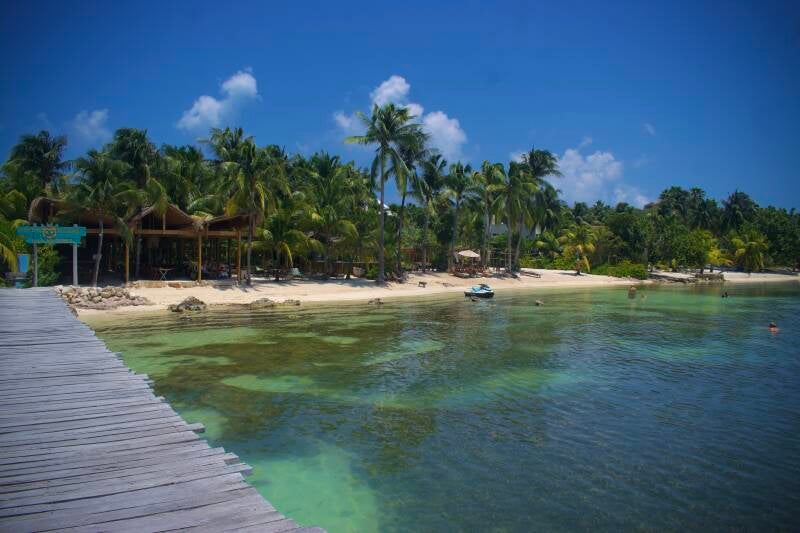
I ended up staying on the southern side of the island, which turned out to be one of the best decisions I made. There were fewer people, more vegetation, more wildlife and generally just a much quieter atmosphere.
So while Isla Mujeres wasn’t necessarily my kind of destination in the traditional “sit on a beach and do absolutely nothing” sense, I actually really enjoyed seeing a different side of the island, and, obviously, finally getting my whale shark encounter.
How to Get There
Just like Cozumel, Isla Mujeres is easily accessible by ferry.
I travelled with Ultramar, departing from Puerto Juarez in Cancún. There are several departure points around Cancún, so you can choose whichever is most convenient for where you’re staying.
As I mentioned in my Cozumel guide, I bought a combination ticket for both Cozumel and Isla Mujeres. It cost 1,100 MXN for both islands, return, and the nice thing about this ticket is that you don’t have to select a specific date or departure time. You basically have six months to use it.
The ferry to Isla Mujeres is also very quick. The crossing takes roughly 20 minutes, so you barely have time to sit down before you’re already there.
One thing I noticed was that these ferries seemed to fill up faster than the ones to Cozumel. If you’re travelling at a busy time, I’d therefore recommend arriving a little earlier rather than assuming you’ll just walk onto the boat five minutes before departure.
The ferry arrives in the main town area on the northern side of the island, which is also where you’ll find most of the restaurants, shops and tourist activity.
Where to Stay?
I stayed at Mayan Monkeys, booking a dorm bed for four nights. Prices fluctuate quite a bit, but I paid around 100 euros for four nights.
Now, when I first realised where the hostel was located, I thought I had made a terrible mistake. It’s on the southern side of the island, quite far away from the main tourist area. The closest proper grocery stores are around a 15-minute walk away, which doesn’t sound like much until you’re doing it in the middle of the Mexican heat carrying groceries.
Then I actually arrived.
And suddenly I understood why this was probably the better place to stay.
The northern part of Isla Mujeres is busy. Like, very busy. The southern side feels completely different. There are more trees, fewer people, more animals and much less of that constant tourist chaos.
For me, that was absolutely worth having to walk a little further for groceries.
If you’re coming to Isla Mujeres specifically for nightlife, restaurants and beach clubs, staying north will probably make more sense. But if, like me, you’d rather have a bit of peace and greenery around you, I’d definitely recommend looking at the southern end of the island.
How to Get Around
This is where Isla Mujeres gets slightly ridiculous. Your transportation options are basically: Taxi. Walking. Bicycle. Motorbike. Golf cart.
Yes. Golf carts.
Golf carts are everywhere on Isla Mujeres and are probably the most popular way for tourists to explore the island. You can rent one for the day and drive around pretty much wherever you want.
The only problem is the price. Depending on the season and rental company, you can easily pay around $100 USD for a full day or $50 for half a day, so it’s definitely not the cheapest way to get around.
If you have a valid licence, renting a motorcycle can be a much cheaper and more practical option. A bicycle is another possibility, although personally I wouldn’t be particularly enthusiastic about cycling around the island in the middle of the Mexican heat.
I mostly walked when I needed to get groceries and used taxis for longer distances.
Taxis are relatively affordable and they’re basically everywhere. Getting from the ferry terminal to my hotel, for example, had a fixed price of around 150 MXN.
And then there is the mysterious Isla Mujeres bus. I saw buses driving around with hop-on hop-off written on them, but I never figured out where the actual bus stops were, what the schedule was or how exactly you were supposed to pay. Maybe there is a perfectly logical system and I simply failed to understand it. Either way, I wouldn’t rely on it as your main method of transportation.
Budgeting: Isla Mujeres Isn’t Exactly Cheap
Isla Mujeres is a tourist destination, and unfortunately the prices know it. Eating out regularly can make your budget disappear surprisingly quickly, especially if you add drinks, tours and transportation on top. I therefore mostly relied on supermarkets and cooked or put together my own meals whenever possible.
There are several smaller shops around the island, including OXXO, Aki and various minisupers, while Chedraui is the larger supermarket option. Depending on where you’re staying, you might need to take a taxi to get there.
I basically lived on bread for a while. If you’ve read my Pantanal blogs, you’ll know that I have absolutely no problem surviving on questionable amounts of bread and frozen lasagna when I’m trying to save money. So this wasn’t exactly a new experience.
Luckily, I also found a tiny coffee shop about ten minutes from the hotel called Lacandona Coffee Bus. And honestly, thank you. Their coffee was decent and their banana cake was absolutely heavenly. If you’re staying nearby, go get one.

Whale Sharks: the Reason I Came Here
And now we get to the actual reason I came to Isla Mujeres. WHALE. SHARKS.
I had been trying to see one for years. I’d already travelled to Donsol in the Philippines during the supposed good season. Nothing. I’d gone to the Maldives during the good season. Nothing.
Meanwhile, everyone around me seemed to be casually swimming with whale sharks while somehow the whale sharks themselves had apparently formed a secret agreement to avoid me personally. So when I planned my Mexico trip, I thought: right, surely this time.
The Cancún-Isla Mujeres area is one of the world’s well-known whale shark aggregation sites. The official season generally runs from May to September, with particularly good concentrations during the summer months. I booked my trip with DC Explorers, which operates tours from both Cancún and Isla Mujeres. Prices are fairly similar between operators, generally starting around $150-200 USD.
There are regulations around the encounters, including limits on how many people can enter the water at once and rules against touching the animals or getting too close. We took a speedboat out towards the area where the whale sharks had been spotted. It took roughly an hour.
And then I got the message I had been waiting for. There were whale sharks.
I was so excited that I genuinely shed a tear. After three years of trying, I was finally about to see one.
And then…
Well.
This is where my feelings became a little complicated.

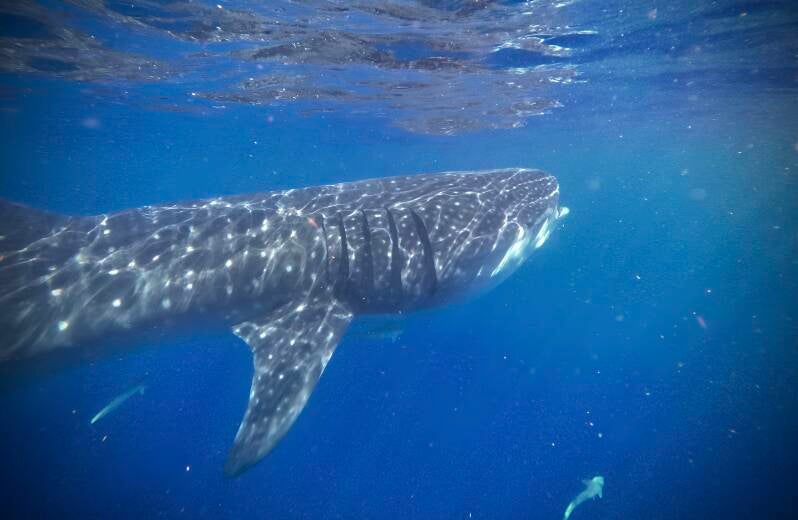
The reality was quite chaotic.
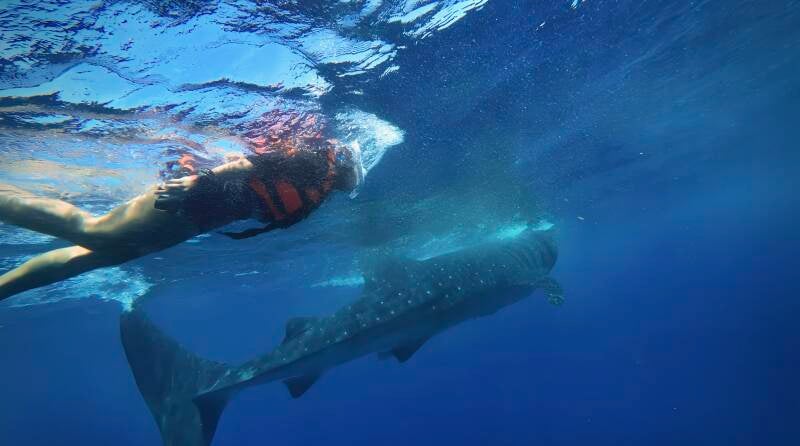
There were a lot of boats around, guides communicating with each other constantly, and people waiting for their turn to enter the water. The basic system was that only two guests from each boat could be in the water with a whale shark at once. You’d jump in, swim alongside the animal for a short period and then get back onto the boat so the next people could have their turn.
In theory, this limits the number of people around the animals. In practice, it felt quite rushed.
I was the last person from our boat to get into the water, which meant that by the time it was my turn, many of the calmer encounters had already happened. I had maybe a couple of minutes with each animal before it was time to get back out.
Don’t get me wrong.
I was ecstatic.
Seeing that enormous animal swimming next to me after years of trying was absolutely incredible. We were also extremely lucky because there were manta rays around as well: the recently described species Mobula yarae.
But I couldn’t completely shake the feeling that the whole experience was a little too hectic. Even with regulations in place, there were many boats and many people wanting their two minutes with the animals. The guides were clearly under pressure to keep everything moving.
I left the experience feeling very grateful that I finally got to see whale sharks, but also slightly conflicted about the way these encounters are organised. It was one of those situations where the animal experience itself was incredible, but the tourism around it didn’t feel quite right.
Would I do it again?
Probably not in exactly the same way.
Would I still recommend seeing whale sharks if this is something you’ve always wanted to do?
Absolutely, just do your research beforehand and choose an operator that prioritises responsible wildlife interactions.
Punta Sur
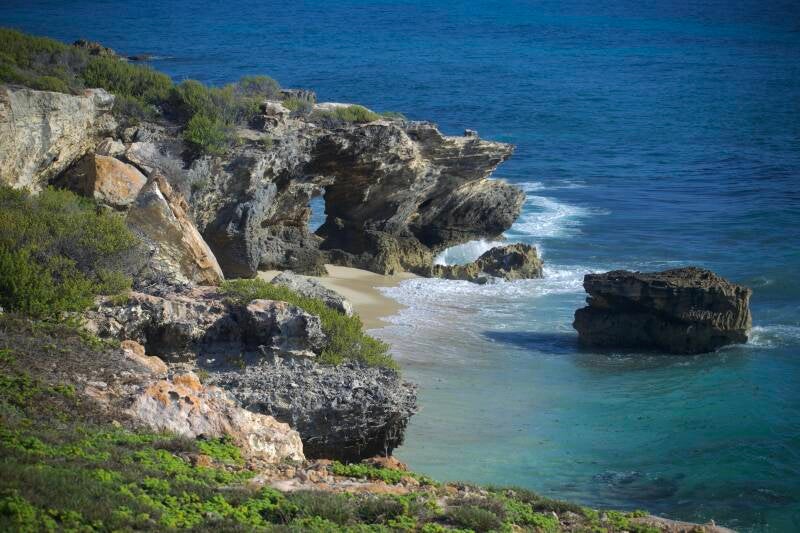
If you want to escape the northern tourist madness, head towards Punta Sur, the southernmost point of Isla Mujeres. This is one of the more rugged parts of the island and definitely felt much more like my kind of place.
You can pay around 60 MXN to enter the very southernmost area, but personally I wouldn’t say you absolutely need to. There are already several good places around the coastline where you can get beautiful views without paying for the full attraction.
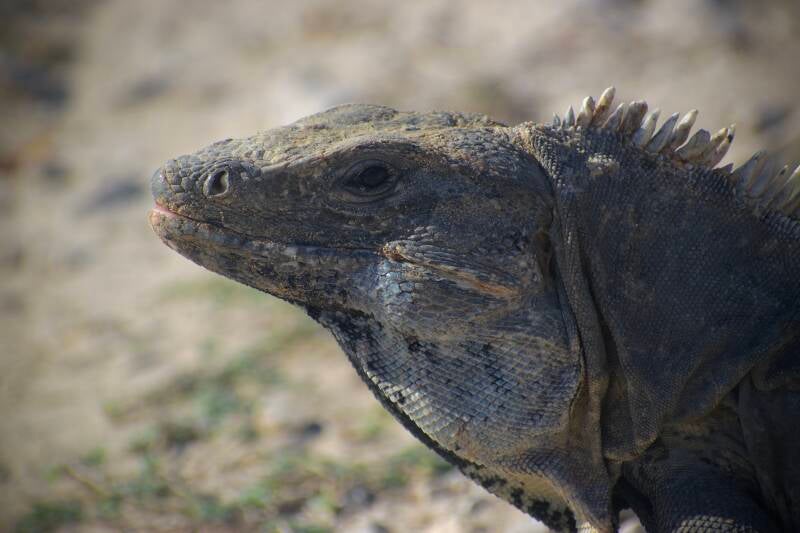
One is near the entrance to Garrafon Park, where there’s a small lookout point. I didn’t visit the park itself, but the surrounding coastline is worth seeing. Another is Parador Fotográfico Punta Sur, where you’ll find an impressive number of iguanas sunbathing around the rocks.
And I mean a LOT of iguanas.
From there, you can also follow a little path along the eastern coastline. There’s a small fence that you can get around and then a trail follows the cliffs.
This was much more my speed than standing on a crowded beach. I also did it at night, which was extremely relaxing (bring a torch though).
Visit Isla Contoy
If you have more time and don’t mind booking a tour, you can also visit Isla Contoy, a protected island north of Isla Mujeres.
The island is known for its relatively untouched beaches, turquoise water, mangroves and birdlife. It is particularly interesting if you’re into wildlife and want something quieter than the main tourist areas. I didn’t visit myself because the tours looked fairly expensive and I already had plenty of wildlife-related plans during this trip.
But I’ve seen the photos. And yes. It looks very, very pretty.
If you’re staying on Isla Mujeres for several days and want another nature-focused day trip, this would definitely be one I’d consider.
Playa Norte and Centro
And finally, we have the part of Isla Mujeres that everyone comes here for.
Playa Norte.
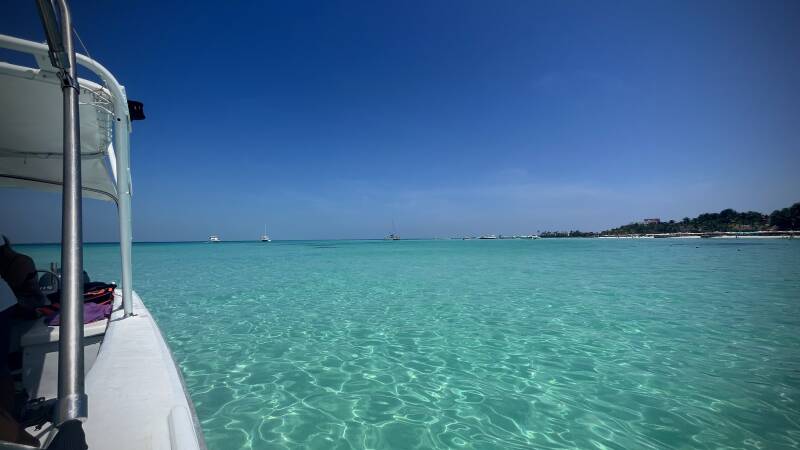
It’s probably the most famous beach on the island, and I can’t really argue with the reasons why. The sand is ridiculously white, the water is bright turquoise and the whole thing looks exactly like what you expect a Caribbean beach to look like.
The problem?
Everyone else knows this too.
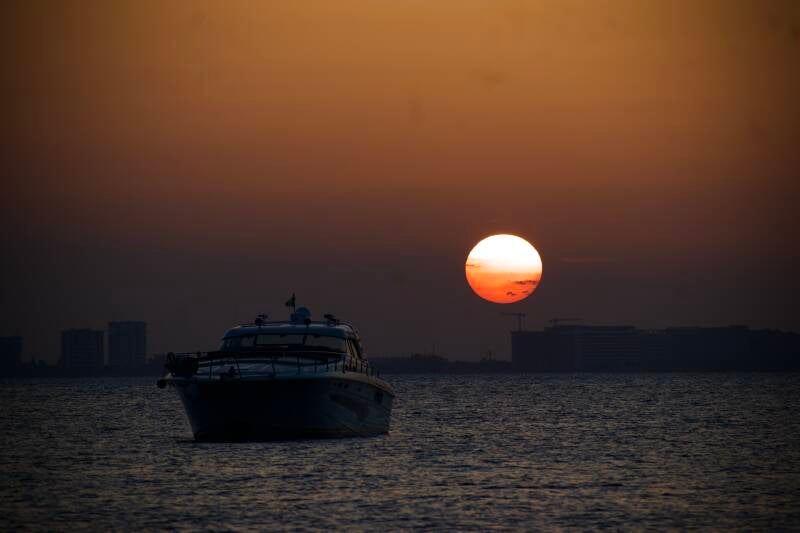
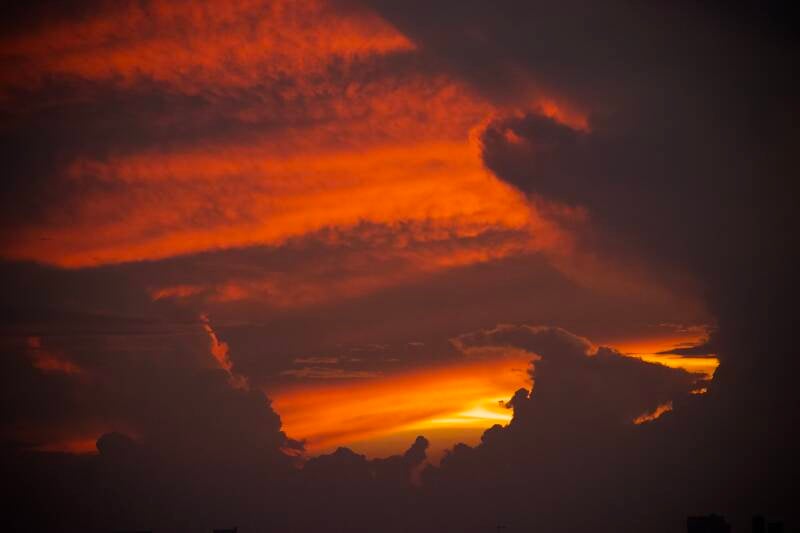
During the day, Playa Norte can get very crowded. If you want to experience it without hundreds of people around you, my advice would be to go extremely early. And by extremely early, I mean around sunrise. You’ll get the softer morning light, beautiful colours in the sky and, most importantly, significantly fewer people.
The Centro area is also where you’ll find most of the restaurants, shops and nightlife. It’s convenient and fun to explore for a while, but personally I preferred getting away from it and exploring the quieter southern side of the island.
Final Thoughts: Would I Go Back to Isla Mujeres?
I came to Isla Mujeres with one goal.
See. A. Whale. Shark.
And I finally did.
So technically, mission accomplished. The island itself was a bit more complicated for me. If you’re looking for a classic Caribbean holiday with beaches, cocktails, restaurants and plenty of tourist infrastructure, Isla Mujeres is basically built for you.
For someone like me who gets bored after approximately seven minutes of sitting on a beach, it’s a little different. But I actually ended up enjoying the island more than I expected, mainly because I stayed on the quieter southern side. Once you get away from the northern tourist centre, there are some really beautiful and much more peaceful areas to explore.
The wildlife was obviously the biggest draw for me. Whale sharks, mantas, iguanas and all the little things I inevitably start looking for whenever I walk somewhere.
Would I spend a week here?
Probably not.
Would I recommend it as part of a Yucatán trip, especially if you’re visiting during whale shark season?
Definitely.
Just don’t make the mistake of thinking the entire island is Playa Norte. There is a much quieter, greener and more rugged side to Isla Mujeres that I personally enjoyed far more.
And after years of whale shark attempts, I can finally stop telling people “yeah, I’ve been trying to see one for years but somehow never managed.”
The whale shark curse has officially been broken.
Create Your Own Website With JouwWeb