

Useful Information
Mexico was one of those countries where I arrived with quite a few preconceived ideas about safety, transportation and how difficult it would be to get around.
Some of those turned out to be completely unnecessary.
I spent my time mainly around Cancún, Playa del Carmen, Tulum, Cozumel, Valladolid, Holbox, and Isla Mujeres, so this guide is mostly based on travelling around the Yucatán Peninsula and Quintana Roo rather than Mexico as a whole. Mexico is enormous, and I’m very aware that travelling around Mexico City, Chiapas, Oaxaca, Baja California or other regions can be a completely different experience.
Still, after travelling around for a while, here are some things I wish I’d known before arriving.
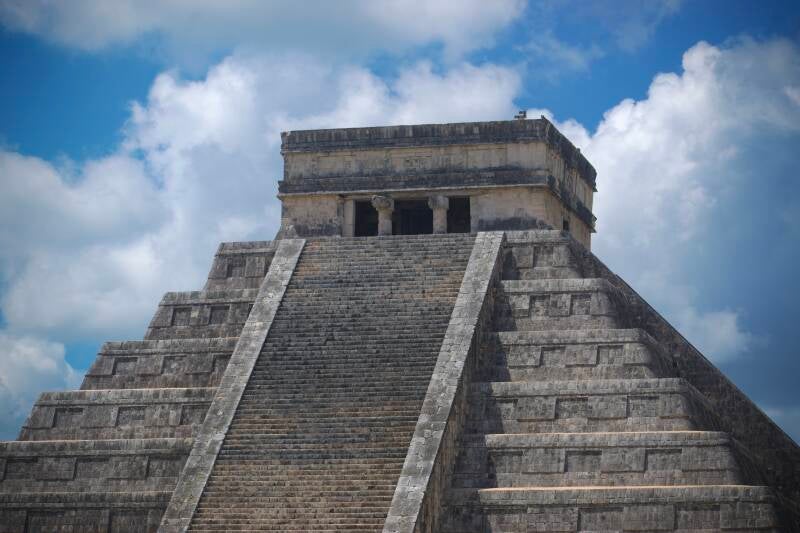
Entry Requirements
As a European citizen, I didn’t need to apply for a visa before travelling to Mexico. Tourists can generally be admitted for up to 180 days, although the exact period is ultimately determined by Mexican immigration when you enter.
You will probably come across quite a lot of information online about a Multiple Immigration Form (FMM), which is described as a digital or paper entry permit that you receive from your airline or at the port of entry.
Honestly? I never had to deal with it. I simply went through immigration at the airport and that was it. There was also an entry fee associated with tourism that was automatically included in my flight ticket, so I didn’t have to pay anything separately when arriving. I was also never asked for proof of onward travel.
That doesn’t mean you should show up without one, though. Immigration officers can ask for proof that you’re leaving the country, so I’d recommend having a return or onward ticket available just in case.
Basically: check the current requirements before you leave, because immigration rules have a funny habit of changing just when you think you’ve figured them out.
Is Mexico Safe?
This was probably the thing I was asked about the most before going. And honestly, I felt much safer than I expected.
I had read plenty of warnings online beforehand, and obviously Mexico has areas where you need to be considerably more careful. I’m not going to pretend the country’s safety issues don’t exist.
But during my trip around the Yucatán Peninsula and Quintana Roo, I felt comfortable for the vast majority of the time. In fact, there were moments where I felt less safe in the capital of my own country, Belgium. That obviously isn’t a scientific assessment of Mexican crime rates. It’s just my personal experience.
People were generally extremely friendly and helpful. I also regularly had my phone and camera out without feeling like I needed to constantly hide them.
One thing I generally do when travelling is watch what the locals are doing. If everyone around me is walking around with their phones out, I’m probably not going to be the only person desperately clutching my phone inside my bag like it’s the Crown Jewels.
That said, common sense still applies.
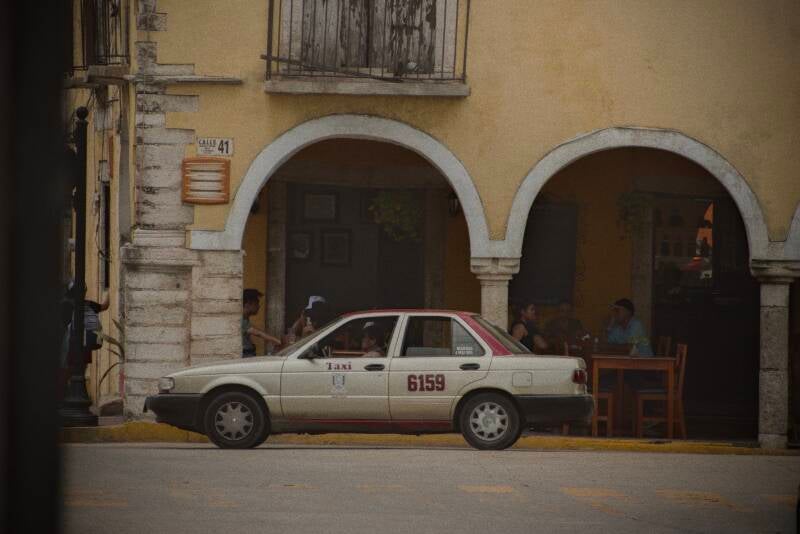
I’d recommend using Uber or authorised taxis, rather than jumping into random taxis on the street. Keep an eye on your belongings in crowded areas, avoid walking around alone late at night in unfamiliar places and don’t flash large amounts of cash around. And obviously, Mexico is a huge country. What applies to a touristy area of Quintana Roo doesn’t automatically apply everywhere else.
One place where I absolutely did feel ripped off: the airport.
Cancún airport was a completely different story. When I arrived, my flight was heavily delayed and I landed late in the evening. I was exhausted and just wanted to get to Cancún. Normally, ADO buses run between the airport and Cancún, and they’re by far the cheaper option. But by the time I arrived, the ticket booth was closed and the people at the entrance were very confidently telling me there were no buses to the city anymore.
I was pretty sure that wasn’t true because everything I’d read online said the buses operated into the evening/night. But at that point I was exhausted, confused and had absolutely no desire to spend another hour trying to figure it out. So I paid US$110 for a private taxi for a journey that took roughly 20 minutes.
It was… painful.
Since the taxi companies run the place, it is also impossible to get an Uber at the airport. Going to the airport, Uber is available.
Shared transfers were also being offered for around US$80. So learn from my exhausted traveller mistake: sort out your airport transfer in advance if you’re arriving late. You can also book transportation online before you arrive, which is probably what I’d do next time.
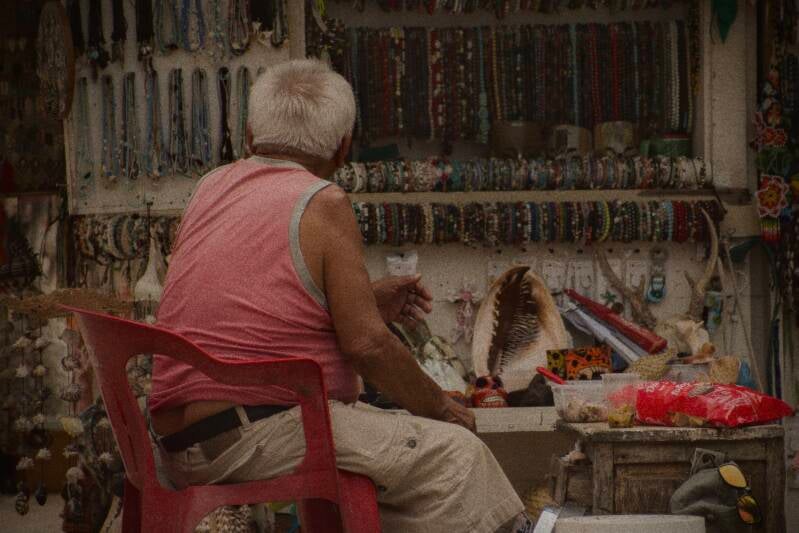
Getting Around Mexico
One of the things I really liked about Mexico was how easy it was to travel between places. The ADO bus network is extensive, organised and surprisingly easy to use.
There are plenty of buses travelling between major destinations, and outside of particularly busy periods or Mexican holidays, I generally didn’t find that I needed to book very far in advance. For example, getting from Cancún to Playa del Carmen was incredibly easy. I simply went to the ADO station, bought a ticket and got on the bus. The same goes for travelling around the Yucatán Peninsula more generally. Make sure you bring a sweater and long pants as these buses tend to put the AC on Antartica mode.
Buses are also considerably cheaper than taking taxis everywhere, so they’re a great option if you’re travelling on a budget.
Within the cities, Uber is sometimes available. Cancun offers rides, but Valladolid, Cozumel, Playa del Carmen and Holbox don't. In Cancun, it is much cheaper to go with Uber (difference can go up to 250 pesos. No I'm not kidding...).
The ferries were equally straightforward. Routes such as Playa del Carmen-Cozumel and Cancún-Isla Mujeres have frequent departures, and I never had any problems with availability. The ferries also don’t seem to fill up nearly as quickly as I expected. There are plenty of departures throughout the day, so you generally have some flexibility.
That said, during Mexican holidays or particularly busy periods, I’d still book ahead rather than gambling on it.
There is also a train, called the Tren Maya, looping around the Yucatan and Quintana Roo peninsulas. DO NOT TAKE THIS ONE! They made the huge mistake by building the tracks right through jungle areas, which has caused many animals to not cross from one side to the other anymore since they built fences around the tracks. Animals have been significantly crossing the roads more, causing more road-kills (including jaguars).
When to Visit Mexico
The nice thing about Mexico is that you can technically travel there all year round. I visited in August and, wow. It was hot. Not “oh, it’s a warm day” hot. More like “why am I sweating while standing completely still?” hot.
The upside was that I didn’t actually experience nearly as much rain as I expected. There were some showers, but overall the weather worked out surprisingly well for me.
The generally recommended period for travelling around many parts of Mexico is December to April, when temperatures are cooler and conditions tend to be drier. If you want to save some money, June to October can be a good period to travel, although this overlaps with the rainy/hurricane season in the Caribbean.
November is particularly interesting if you want to experience Día de los Muertos, while certain wildlife experiences have very specific seasons.
For example, whale shark season around Isla Mujeres officially runs from May 15 to September 17, with the largest aggregations generally occurring around mid-June to mid-August. In La Paz, Baja California Sur, whale shark season is generally October to April, while Bahía de los Ángeles has a longer season running roughly from June to December.
And if you’re heading to Cozumel specifically for eagle rays, December to March is generally considered a good period for them. Just expect more divers and tourists during the busier season.
Basically, choose your travel dates based on what you actually want to see rather than simply looking at the cheapest flights.

How Expensive is Mexico?
Okay, this one surprised me. Mexico isn’t necessarily as cheap as I expected.
You can travel cheaply, but if you’re staying in touristy areas and doing lots of activities, the costs add up extremely quickly. A meal in a restaurant can easily cost US$10-15 or more, particularly in places like Playa del Carmen, Tulum and Cozumel.
Then you add accommodation, transportation, diving, cenote entrance fees, tours and… suddenly your “cheap Mexico trip” isn’t looking quite so cheap anymore. The diving in particular was one of my biggest expenses.
My cenote dives were around 2,300 MXN per dive, while my six Cozumel dives cost around US$400. So if you’re a diver, definitely budget accordingly.
Supermarkets are your friend! One of the easiest ways I kept my costs down was simply buying food at supermarkets. Places like Walmart, Soriana and local supermarkets are useful if you’re staying somewhere with a kitchen or even just want to grab breakfast, snacks and drinks rather than eating out three times a day. It doesn’t sound exciting, but buying yoghurt, fruit, bread and snacks instead of going to a restaurant for every meal makes a surprisingly big difference.
Cash or Card?
You can pay by card in a lot of places, especially hotels, larger restaurants, supermarkets and tourist businesses. I used my WISE card throughout the trip and had very few problems.
However, I would still recommend carrying cash. Smaller restaurants, local businesses, street food stalls, taxis and some activities may prefer cash, and you don’t want to end up standing there with your card while someone tells you, “cash only.”
Also, don’t assume every ATM is a good idea. Try to use ATMs attached to reputable banks rather than random standalone machines, and pay attention to the exchange rate and any additional fees. And if the ATM asks whether you want it to convert the transaction into your home currency, don’t automatically accept it. Your own bank/card provider will often give you a better exchange rate.
Tipping
This was probably one of the things I struggled with most as a European. Tipping is expected in many situations.
And coming from a place where tipping isn’t nearly as ingrained into everyday life, I constantly found myself wondering: “Okay… how much am I supposed to give this person?”
As a general guideline, 10-20% in restaurants is common depending on the service. For tours, around 100-200 MXN per person is a reasonable starting point, although obviously you can give more if someone went above and beyond.
Ultimately, tipping is still your choice. If someone provided excellent service, was particularly helpful or clearly put in a lot of effort, I think giving a little extra is a nice gesture. Just remember that tips can add a surprisingly large amount to your daily budget if you’re eating out and doing tours every day.
Internet and SIM Cards
If you’re staying in Mexico for more than a few days, I’d recommend getting a local SIM or eSIM.
Wi-Fi is widely available in hotels, restaurants and cafés, but having mobile data makes travelling around so much easier, especially when you’re using maps, booking transportation or trying to communicate with accommodation and dive centres. An eSIM is the easiest option if your phone supports it, although local SIM cards can be considerably cheaper if you’re staying for a while.
I personally like having a local SIM because I use a ridiculous amount of data when travelling. However, I did experience in a lot of areas that I didn't have any connection at all so make sure you download maps on Google Maps for offline use.
Drinking Water
This is one of those boring things you need to think about. Don’t assume tap water is safe to drink everywhere in Mexico.
I stuck to bottled or filtered water and used the water provided by my accommodation where appropriate. It’s also worth carrying a reusable bottle that you can refill with filtered water. You’ll save money and avoid going through approximately seventeen plastic bottles every day.
Especially in August. Because you will drink a LOT.
Stomach Problems: the Part Nobody Puts on Instagram
Okay, let’s talk about something slightly less glamorous: my stomach absolutely hated Mexico.
And this genuinely surprised me. I travel a lot. I have eaten street food in plenty of countries, brushed my teeth with questionable tap water, and generally consider myself pretty good at avoiding the classic “traveller’s stomach”. Apart from Vietnam, where I somehow managed to get food poisoning twice in two weeks, I very rarely have problems.
Mexico absolutely humbled me.
I had some of the worst diarrhoea I’ve experienced while travelling, accompanied by the kind of burning asshole situation that makes you question every life decision that brought you to that bathroom. There were moments where my digestive system basically decided that its only purpose in life was to evacuate the entire contents of my body as quickly as humanly possible.
And before anyone asks: I swear I was being careful. I stuck to bottled water for drinking and even used bottled water to brush my teeth. I wasn’t exactly out there drinking tap water and licking the pavement.
So, was it something I ate? Something in the water? Just incredibly bad luck? I honestly have no idea. It could simply have been an unlucky combination of food, bacteria and my digestive system deciding it had had enough. I also travelled through some very touristy areas, so I can’t exactly blame it on eating somewhere completely questionable.
Either way, if you’re travelling around Mexico, bring something for diarrhoea with you. Loperamide became my best friend when I needed to stop the non-stop fountain situation long enough to actually leave my hotel room. Oral rehydration solution is even more important if you’re losing a lot of fluid. I also found electrolyte drinks such as Powerade useful for replacing some of what I was losing.
That said, don’t just try to shut down severe diarrhoea indefinitely with loperamide. If you have blood in your stool, a high fever, severe abdominal pain, signs of dehydration, or symptoms that aren’t improving, get medical advice rather than trying to tough it out.
I genuinely don’t know whether Mexico is particularly difficult on the stomach compared with other countries I’ve visited, or whether I simply got spectacularly unlucky. But considering how much I travel and how rarely this happens to me, Mexico definitely earned a place on my “my digestive system remembers this country” list.
Practical tip: pack some anti-diarrhoeal medication, oral rehydration salts/electrolytes and don’t underestimate how quickly dehydration can sneak up on you in the Mexican heat. Your future self may thank you.
A Few Extra Things I Learned
Mexico is very easy to travel around, but a few little things made my trip much easier.
- Learn a little Spanish. You can get around touristy areas with English, but knowing basic Spanish words and phrases is extremely useful once you’re outside the main tourist zones. Even knowing hola, gracias, cuánto cuesta and dónde está… goes a long way.
- Don’t underestimate the heat. August in Quintana Roo was brutally warm. Sunscreen, water, sunglasses and a hat are not optional accessories.
- Bring mosquito repellent. Especially if you’re visiting cenotes, jungle areas or spending time outside in the evening.
- Keep some cash with you. Even if you mostly use cards, having a few hundred pesos can save you when a small business doesn’t accept cards.
- Don’t book everything through your hotel. Sometimes it’s convenient, but you’ll often find better prices by booking directly with operators or comparing options yourself.
- Give yourself more time than you think you need. Mexico looks deceptively easy to cover on a map. It is enormous, and even within Quintana Roo and Yucatán, getting between destinations takes time.
And finally:
- Don’t try to do everything. I originally planned Mexico around diving and ended up adding cenotes, Cozumel, Isla Mujeres and a bunch of other things along the way. There is always another cenote, another island, another archaeological site and another wildlife experience you could add.
At some point you have to accept that you’re not going to see everything in one trip. Which is probably a good excuse to come back.
Final Thoughts
Mexico ended up being much easier to travel around than I expected. The buses were good, the ferries were reliable, people were incredibly friendly and I felt comfortable travelling around the areas I visited. The biggest challenges for me were honestly the heat, the occasional tourist pricing and figuring out exactly how much I was supposed to tip.
The main thing I’d emphasise is that Mexico isn’t one single travel experience. Safety, prices, transportation and infrastructure can vary enormously depending on where you are. My experience was mostly around Cancún, Playa del Carmen, Tulum, Cozumel and Isla Mujeres, and I found those areas very accessible for independent travel.
So if you’re nervous about travelling around Mexico on your own, don’t let the internet horror stories completely scare you off. Do your research, use common sense, watch what locals do, don’t take unnecessary risks and you’ll probably find yourself settling into travelling around Mexico much faster than you expected.
And maybe don’t make the same mistake I did at Cancún airport and pay US$110 for a 20-minute taxi ride because you’re too exhausted to argue with someone.
That one still hurts a little.
Create Your Own Website With JouwWeb